Cart
0
A vintage rug can have decades of life behind it and still be a beautiful, dependable choice for your home. Knowing how to assess vintage rug condition helps you look beyond surface charm and understand what you are actually bringing into your space: an authentic handmade textile with character, or a piece whose wear may affect its longevity and value.
The goal is not to find a vintage rug that looks brand-new. Honest age, gentle variation, and a softened palette are often the very qualities that make an older hand-knotted rug feel so special. What matters is whether its condition suits your room, your expectations, and the way your household lives.
How to Assess Vintage Rug Condition at First Look
Start by looking at the rug from several feet away. Its overall appearance should feel balanced, even if the color has mellowed or the pile is lower in certain areas. A beautiful vintage Persian, Turkish Oushak, Kazak, or tribal rug may show a little movement in its colors and texture, but the design should still read clearly.
Pay attention to the rug's shape. A handmade rug is not always perfectly rectangular, particularly after years of use, washing, and natural fiber movement. Slight irregularity is part of handwoven character. Significant curling, deep rippling, severe buckling, or stretched corners deserve a closer look, especially if the rug will sit under dining chairs or in a busy hallway.
Then consider where the wear appears. Light, even pile reduction across the field can be attractive and expected in an older rug. It often gives wool a velvety, luminous look. Heavy wear concentrated in a walkway, at the center, or around the edges may be less practical, depending on where you plan to use the rug.
A vintage piece for a formal living room can tolerate more visible age than one intended for a front entry or a home with energetic children and pets. Condition is never separate from placement.
Check the Pile, Wool, and Foundation
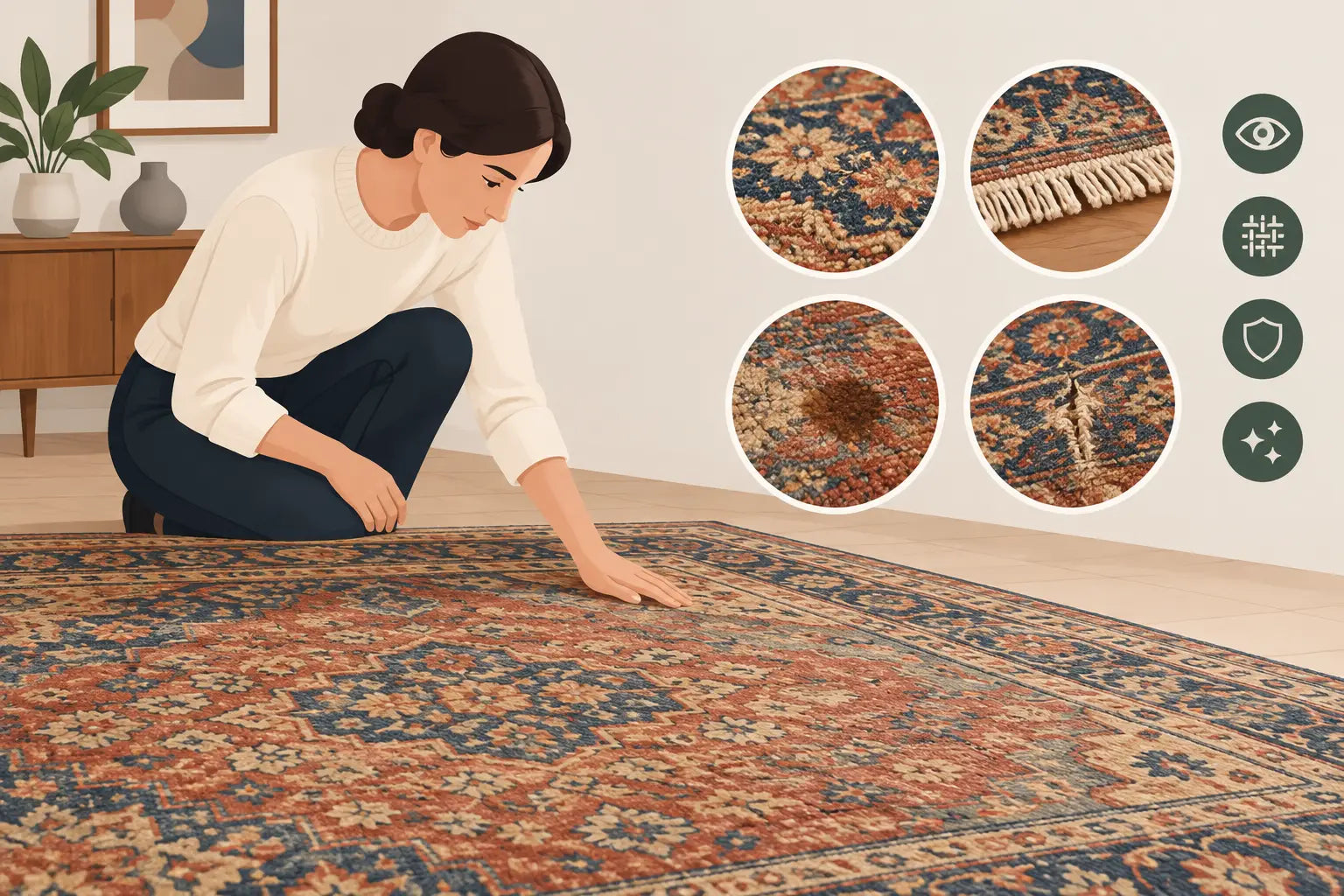
Pile refers to the visible wool surface of the rug. Run your hand gently across it and look for areas that are notably lower than the rest. In a hand-knotted rug, low pile is not automatically a problem. Many sought-after vintage rugs have a worn finish that feels refined rather than tired.
The concern begins when wear has reached the foundation. If you can see the cotton or wool warp and weft threads beneath the pile, the rug may be structurally vulnerable in that area. Small exposed spots can sometimes be stabilized or professionally repaired. Broad areas of foundation exposure mean the rug should be priced accordingly and chosen for a lower-traffic setting.
Wool itself offers useful clues. Quality wool usually feels resilient, with a slight natural luster rather than a slick synthetic shine. It should not feel brittle, papery, or excessively dry. Older wool can be wonderfully soft, but it should still have integrity when you gently press the surface.
Turn the rug over whenever possible. The back reveals much more than the front alone. You can see knot definition, old repairs, thinning sections, and whether the rug's construction appears consistent. On an authentic hand-knotted piece, the pattern is visible on the reverse, though less plush than on the face. A clear, well-defined back is often a reassuring sign of quality craftsmanship.
Look Closely at Repairs and Restored Areas
A well-done repair is not a reason to dismiss a vintage rug. In fact, careful restoration is common among fine older textiles and can extend a rug's useful life for years. What matters is transparency, quality, and scale.
Look for changes in pile height, texture, knot size, or color that interrupt the surrounding design. Repairs may appear as a slightly different patch on the back, a line of resecured weaving, or newly wrapped edges. Skilled repairs blend into the rug and preserve its character. Poor repairs can feel stiff, bulky, mismatched, or overly obvious.
Fringe deserves its own inspection. On most hand-knotted rugs, fringe is the continuation of the rug's foundation, not a decorative trim added afterward. Shortened fringe is common and generally harmless when the ends have been properly secured. Fringe that is unraveling into the body of the rug is more serious because it can lead to loss of structure.
Also inspect the side edges, often called selvedges. These wrapped edges protect the outer warp threads. Minor wear can be repaired, but extensive loss along the sides may allow the rug to unravel over time. If a rug has repairs, ask whether they are structural or cosmetic. Structural work addresses the rug's longevity; cosmetic work may simply improve its appearance.
Evaluate Color, Stains, and Fading Honestly
One of the great pleasures of vintage rugs is their color. Natural dyes and hand-spun wool can develop a gentle abrash, or intentional-looking variation in tone, that gives the surface depth. This is different from uneven fading caused by prolonged sunlight.
Sun fading often appears along one side of a rug or in areas that received direct window exposure. It can still be beautiful, especially in softly faded Oushak and Persian designs, but it should be reflected in the rug's value. Rotate any vintage rug periodically once it is in your home to help future exposure remain even.
Stains call for an honest, close inspection. A faint, stable mark may be acceptable in a patterned rug, where it disappears into the design. Dark rings, sticky areas, residue, or widespread discoloration are more concerning. Ask whether the rug has been professionally washed, and avoid assuming a stain will come out with a home treatment. Vintage wool benefits from thoughtful care, not harsh chemicals.
Be alert for color transfer as well. This is most relevant with deeply saturated reds, blues, and indigos. A properly washed and cared-for rug should not readily bleed during normal use, but dampness and aggressive cleaning can create problems. If you are buying online, detailed photographs in natural and indoor light help you understand the true color range.
Smell and Storage Matter More Than Many Buyers Realize
A rug can look gorgeous in photographs yet carry odors from smoke, pets, mildew, or improper storage. A clean vintage wool rug may have a subtle natural wool scent, particularly when first unpacked, but it should not smell musty, sour, or strongly perfumed to cover another odor.
Mildew deserves special caution. It can indicate that the rug was stored in a damp space, and it may be difficult to fully resolve. Check for stiffness, dark spotting on the back, or a persistent damp-basement smell. Professional washing may help some odor issues, but condition and storage history still matter.
Moth damage is another concern. Look for irregular bare patches, loose fibers, or small areas where pile seems to have been eaten away. Active moth issues are uncommon in a properly cared-for rug, yet old damage should be disclosed and evaluated. A repairable area is one thing; extensive damage throughout the rug is another.
Match the Rug's Condition to Its Intended Room
There is no single definition of perfect vintage condition. A beautifully worn rug may be exactly right for a relaxed bedroom, layered living room, or low-traffic office. A more evenly preserved rug is often a better fit beneath a dining table, in a busy family room, or along a frequently used runner path.
Think of condition as part of the design decision. Lower pile can make a room feel collected and relaxed, while fuller pile brings greater softness and visual presence. An antique repair may add to a rug's story, but a buyer who wants a pristine, formal look may prefer a newer handmade piece or a vintage rug with minimal restoration.
When reviewing a one-of-a-kind rug, ask for clear images of the front, back, corners, fringe, and any visible areas of wear or repair. Exact dimensions also matter, since a rug with slightly uneven handmade edges may measure differently at each end. A knowledgeable rug specialist should be comfortable explaining what is age-appropriate, what has been restored, and how the piece is likely to perform.
At Belmont Rugs, we believe a vintage rug should be chosen with both your heart and your home in mind. The right piece does not need to be flawless to be stunning. It needs to be honestly represented, structurally sound for its intended use, and beautiful enough that its history feels like part of the room's story.