Cart
0
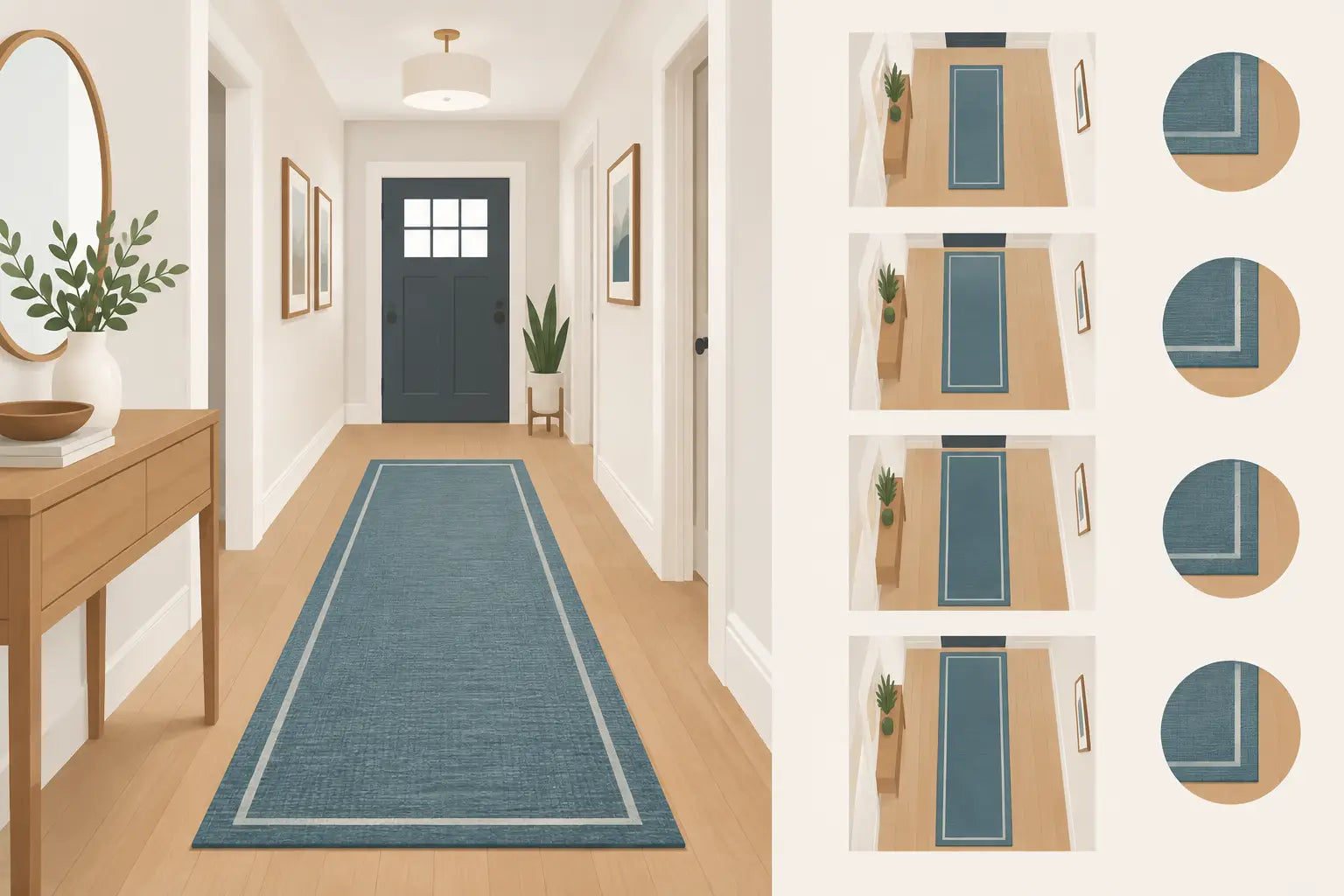
A hallway can feel like an afterthought until the right runner changes it. This hallway runner rug size guide helps you choose a piece that brings warmth, color, and handmade character to the passage without making a narrow space feel crowded. The goal is not to cover every inch of flooring. It is to frame the walkway beautifully while allowing the architecture of your home to breathe.
A hand-knotted runner is especially well suited to this job. Natural wool feels inviting underfoot, holds up beautifully in active areas, and gives a long, plain corridor a sense of intention. But even a stunning Turkish Oushak, Persian, Kilim, or Moroccan runner needs the right proportions to look at home.
Start With the Hallway, Not a Standard Size
Runner sizes are usually described by their width and length, such as 2'6" x 8', 2'6" x 10', or 3' x 12'. These standards are useful starting points, but they are not a substitute for measuring. Handmade rugs can also vary slightly from their listed dimensions, which is part of their authentic, individually crafted character.
Measure the open floor area of your hallway from wall to wall and from end to end. Then account for door swings, closets, radiators, floor vents, stair landings, and furniture. A runner that looks ideal on paper can become impractical if a door catches its edge every morning.
Painter's tape is one of the simplest planning tools. Mark the proposed runner dimensions directly on the floor, then walk the hall as you normally would. You will quickly see whether the width feels generous or restrictive and whether the length begins and ends in the right places.
The Best Runner Width for Most Hallways
In most homes, leave about 3 to 6 inches of bare floor visible on each side of the runner. This border keeps the rug from looking wall-to-wall and creates a cleaner, more tailored result. In a wide hallway, a 3' runner often has the presence needed to anchor the space. In a narrow hall, a 2' to 2'6" width is generally the more comfortable choice.
For example, a 36-inch-wide hallway usually works well with a 24-inch runner, leaving roughly 6 inches of floor on either side. A 42-inch-wide hallway can often accommodate a 30-inch runner with the same balanced effect. If your measurements fall between standard sizes, err slightly narrower rather than wider. Too much exposed floor is usually preferable to a runner that feels squeezed against the walls.
The exception is a very broad, gallery-like corridor. Here, a narrow runner may look undersized and visually disappear. A wider handmade runner with a larger-scale pattern can make the hall feel intentional and substantial, especially when it connects more expansive rooms.
Consider Baseboards and Built-Ins
Measure from the inside edge of baseboards rather than relying on a wall-to-wall estimate. Built-in cabinetry, bench seating, and low registers can reduce usable width as well. The runner should sit flat and clear these details, not press into them.
How Long Should a Hallway Runner Be?
Length depends on where the hallway begins and ends. A good rule is to leave approximately 4 to 8 inches of bare flooring at each end. This creates a finished border and prevents the runner from looking like it was simply unrolled until it hit a wall.
An 8-foot runner is a natural fit for many short, straight corridors. Ten-foot and 12-foot runners suit longer bedroom wings, halls connecting living spaces, and entry passages. In exceptionally long halls, a custom-length runner can be ideal, but two complementary runners may also look thoughtful when separated by a doorway or a natural architectural break.
Avoid choosing a runner that ends halfway through a door opening if you can. A rug boundary in the middle of a threshold can look awkward and may create a tripping point. Instead, end the runner before the door zone or extend it beyond the opening where the layout allows.
A Hallway Runner Rug Size Guide for Common Layouts
Every home has its own proportions, but a few common layouts make sizing decisions easier.
Narrow apartment or cottage hallway
For a hall around 30 to 36 inches wide, look first at runners about 2' wide to 2'6" wide. An 8-foot length works well in many compact homes, while a 10-foot runner can create a more continuous visual line in a longer corridor. Choose a design with an open field or smaller repeating motifs if the space has limited natural light.
Standard bedroom hallway
A hallway around 36 to 48 inches wide usually welcomes a 2'6" runner. Select the length based on the clear floor area, often 8 or 10 feet. This is an excellent place for a classic Persian-inspired pattern, a soft Oushak floral, or a subtle neutral wool runner that adds texture without competing with bedroom doors and artwork.
Wide central corridor
A 3' x 10' or 3' x 12' runner can look especially beautiful in a wider hall that connects gathering spaces. The larger scale gives a hand-knotted rug room to show its design, whether that is a colorful Kazak geometric, a timeless Turkish pattern, or a distinctive fish-design motif. Leave enough floor around the edges to preserve the sense of width that made the hallway appealing in the first place.
Entry hall or passage behind a front door
Measure the door swing before anything else. You need enough clearance for the door to open freely over the runner, particularly if you favor a thicker wool pile. A lower-profile flatweave Kilim can be a smart option where clearance is tight, while a hand-knotted wool runner offers plushness and durability in an entry with more room.
Match the Rug’s Visual Scale to the Space
Physical dimensions matter, but pattern scale matters too. A long hallway naturally draws the eye forward, so the runner’s design becomes a visual path through the home. A detailed allover pattern can disguise everyday footprints and add depth in an active family hallway. A quiet tonal design can make a small, darker corridor feel calmer and more open.
Borders deserve attention as well. Traditional runners often feature a defined border, which creates a handsome architectural frame in a long, straight hall. If the runner is too short, that border can make the rug look even more abruptly cut off. Giving the piece proper end clearance allows its full composition to read as intended.
A runner does not need to match every room exactly. It should, however, create a graceful transition. Pull a color from nearby artwork, wood tones, upholstery, or wallpaper, then let the rug introduce a little contrast. Handmade rugs are particularly good at this because their natural variation gives a home depth rather than a perfectly coordinated showroom effect.
Plan for Doors, Traffic, and Everyday Use
Hallways are hardworking spaces. Before choosing your size, open every door that crosses the rug’s path and check closet doors, bathroom doors, and bedroom doors separately. Even a beautiful runner is not the right choice if it interferes with daily movement.
For high-traffic areas, wool is a practical and enduring material. Its fibers have natural resilience, and the layered color of a hand-knotted design is forgiving in a way that solid, pale synthetic runners often are not. A rug pad beneath the runner adds cushioning, helps prevent shifting, and protects both the rug and the floor. Keep the pad slightly smaller than the runner so it remains hidden.
If your household includes young children, pets, or frequent guests, avoid sizing a runner so tightly that its edges sit in the main path of swinging doors or furniture movement. A slightly shorter, properly placed rug will serve you better than a larger one that constantly needs adjustment.
When an Irregular Size Is the Right Choice
One-of-a-kind handmade runners do not always come in exact standard dimensions, and that is not a flaw. A 2'7" x 9'8" runner may be the piece that gives your hallway its character, even if you initially expected to buy a 2'6" x 10'. Focus on the visible floor border and the practical clearances, not on forcing your home into a neat catalog category.
This is also where personalized guidance can be valuable. At Belmont Rugs, exact product dimensions are part of choosing confidently, especially when a hallway has unusual angles, offsets, or door placement. A quick set of measurements and a photo of the space can make the decision much easier.
The best hallway runner is not merely a strip of color between rooms. It is a beautiful, durable piece that makes the walk from one part of your home to another feel considered, welcoming, and distinctly yours.