Cart
0
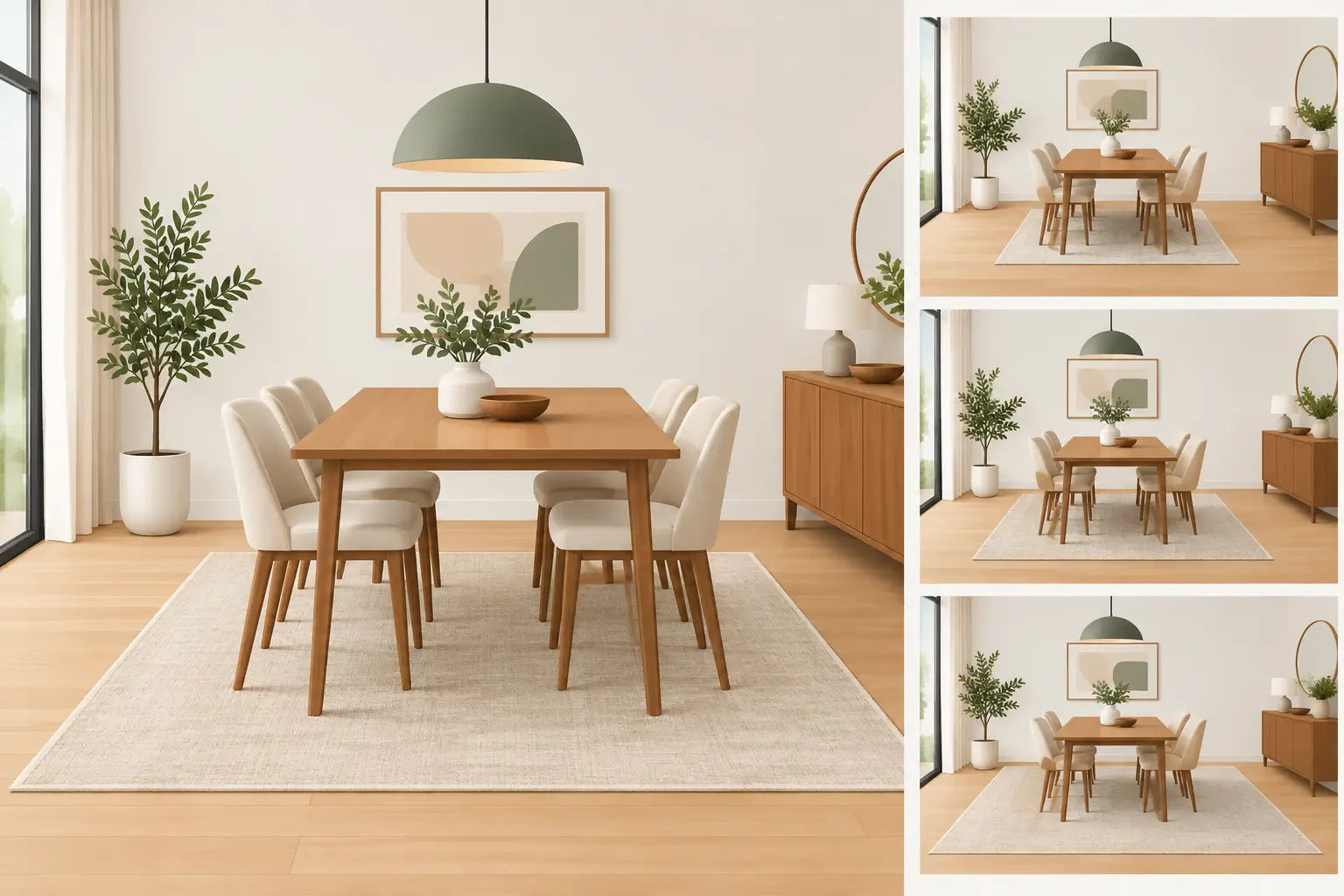
A dining room can look beautifully furnished until someone pulls out a chair and its back legs fall off the rug. That is why dining room rug size is less about filling open floor space and more about giving every seated guest a comfortable, grounded place at the table. A properly sized handmade rug brings warmth underfoot, protects flooring, softens the acoustics of a busy room, and makes the table feel intentionally placed rather than floating in the middle of the room.
For most homes, the best starting point is simple: choose a rug that extends at least 24 inches beyond every side of the dining table. That extra border gives chairs room to slide back while remaining fully on the rug. From there, the right choice depends on your table shape, chair style, room dimensions, and how you use the space.
How to Choose the Right Dining Room Rug Size
Before looking at colors or patterns, measure the table at its largest everyday size. If you use leaves regularly for family dinners or holidays, measure with the leaves in place. A rug that works only when the table is closed can feel too small the moment guests arrive.
Add 24 to 30 inches to each side of that measurement. For example, a 42-by-72-inch rectangular table needs a rug around 8 by 10 feet at minimum. If the room allows, a 9-by-12-foot rug offers a more generous, polished proportion. Larger rugs often make a dining room feel more spacious because the furniture arrangement reads as one complete composition.
There are exceptions. In a compact breakfast nook, you may not have room for a full 24-inch border on every side. In that case, prioritize the sides where chairs are pulled out most often. A rug should never create a tripping edge in a main walkway or press awkwardly against a doorway.
A quick sizing guide by table shape
A round table looks most natural on a round or square rug. For a 48-inch round table seating four, an 8-foot round rug is usually a comfortable fit. A 60-inch round table generally calls for a 9-foot round rug, especially when it is paired with wider upholstered chairs.
Rectangular dining tables are the most flexible. An 8-by-10-foot rug suits many tables seating six, while a 9-by-12-foot rug is a strong choice for tables seating eight to ten. Long, narrow tables may work with a runner-like proportion, but a true area rug still needs enough width for chair movement.
Square tables tend to look best with square rugs when the room can support them. A 60-inch square table often pairs well with an 8-by-8-foot or 9-by-9-foot rug. If square sizes are difficult to find, a larger rectangular rug can work beautifully, provided it leaves an even-looking border around the table.
Let Chair Movement Set the Rug Boundary
The most common dining-room sizing mistake is measuring only the tabletop. Chairs are part of the footprint. Pull one chair back as if someone has just stood up, then measure from that point to the opposite side of the table. This gives you a realistic picture of the rug area you need.
Consider chair construction, too. Sleek wood chairs need slightly less clearance than deep armchairs, Parsons chairs, or chairs with a wide curved back. If your dining chairs have casters, a low, tightly woven rug is often easier to use than a thick, plush pile.
A rug that is too small creates more than a visual problem. Chair legs can catch at the edge, making meals less comfortable and putting extra wear on the rug’s border. A generously sized rug allows chairs to move smoothly and gives the room a calmer, more finished appearance.
Leave the Right Amount of Floor Around the Rug
Once the rug is large enough for the table and chairs, look at the space between its edge and the walls. In a dedicated dining room, leaving roughly 18 to 24 inches of visible flooring around the rug is a classic proportion. In a smaller room, 8 to 12 inches may be enough.
Symmetry matters more than a rigid number. If one side of the rug nearly touches a wall while the other leaves a wide strip of floor, the room can feel off balance. Center the rug under the table rather than under a chandelier alone, particularly when the lighting fixture is slightly off-center.
Open-concept homes call for a different approach. Here, the rug can define the dining zone within a larger space. It may sit closer to the edge of a kitchen island, living area, or wide passage, but leave a clear traffic route around it. The goal is for the rug to frame the dining area without becoming an obstacle between rooms.
Choose a Shape That Supports the Room
Matching the rug shape to the table is a reliable choice, but it is not the only one. A rectangular rug under a round table can look striking in a long dining room, especially when it echoes the room’s architecture. Likewise, a round rug under a small square table can soften a room full of straight lines.
What matters is visual balance. The table should sit comfortably within the rug’s boundaries, with roughly equal space around it. If a table is centered on a rug but feels crowded at either end, the rug is likely too short. If the rug overwhelms the room and leaves little exposed flooring, consider whether a smaller size or a lighter design would better suit the space.
Why Handmade Wool Rugs Work So Well in Dining Rooms
Dining rooms ask a great deal from a rug. There are chair legs, crumbs, occasional spills, sunlight, and the everyday movement of family life. A high-quality hand-knotted wool rug is well suited to that role because wool has natural resilience and a texture that helps disguise minor marks between cleanings.
A low to medium pile is often the most practical choice beneath dining chairs. Flatwoven Kilims can bring a relaxed, graphic look and make chairs easy to slide, though they should be used with a quality rug pad to prevent shifting. Hand-knotted Turkish Oushak rugs, Persian designs, Afghan rugs, and Moroccan styles offer more body and texture while still feeling refined enough for a formal dining room.
Pattern is especially useful in a dining space. A softly aged Oushak, richly detailed Persian rug, or geometric Kazak design can introduce color and movement without making every small crumb or footprint visible. For a quieter room, a tonal Chinese rug or a subtle contemporary design offers the same handcrafted character with a more restrained effect.
Do not assume a dining-room rug must be dark. A lighter wool rug can be gorgeous beneath a wood table when its pattern has enough variation to feel forgiving. The better question is whether the design fits your household. A busy entertaining home may prefer a nuanced multicolor field, while a formal dining room used occasionally can support a more delicate palette.
Use a Rug Pad, Even Under a Heavy Table
A rug pad is a practical finishing layer, not an afterthought. It helps keep the rug from creeping as chairs move, cushions the pile, and reduces wear against the floor. On hardwood, choose a pad designed specifically for hard surfaces and avoid materials that can transfer or damage finishes.
The pad should sit just inside the rug edge, usually by one to two inches on all sides. It should never extend beyond the rug, where it can collect dust or create a visible outline. If your rug is particularly fine or antique, a quality pad also helps protect its structure for years of use.
Make the Final Decision in the Room, Not Just on Paper
Measurements narrow the field, but proportion and color are easiest to judge in context. Use painter’s tape to outline the proposed rug size on the floor. Pull chairs back, walk through the room, open nearby doors, and notice where people naturally pass. This simple step often makes the right size obvious.
Then consider what you want the rug to say about the room. A large, softly colored Oushak can make a traditional dining set feel lighter and more current. A saturated Persian or Afghan rug can bring welcome depth to neutral walls. A flatwoven Kilim can add casual energy to a breakfast room without asking for too much formality.
The right rug does not merely fit beneath the table. It gives the room a sense of welcome, supports the way you gather, and lets a beautifully made piece become part of the memories created around it.