Cart
0
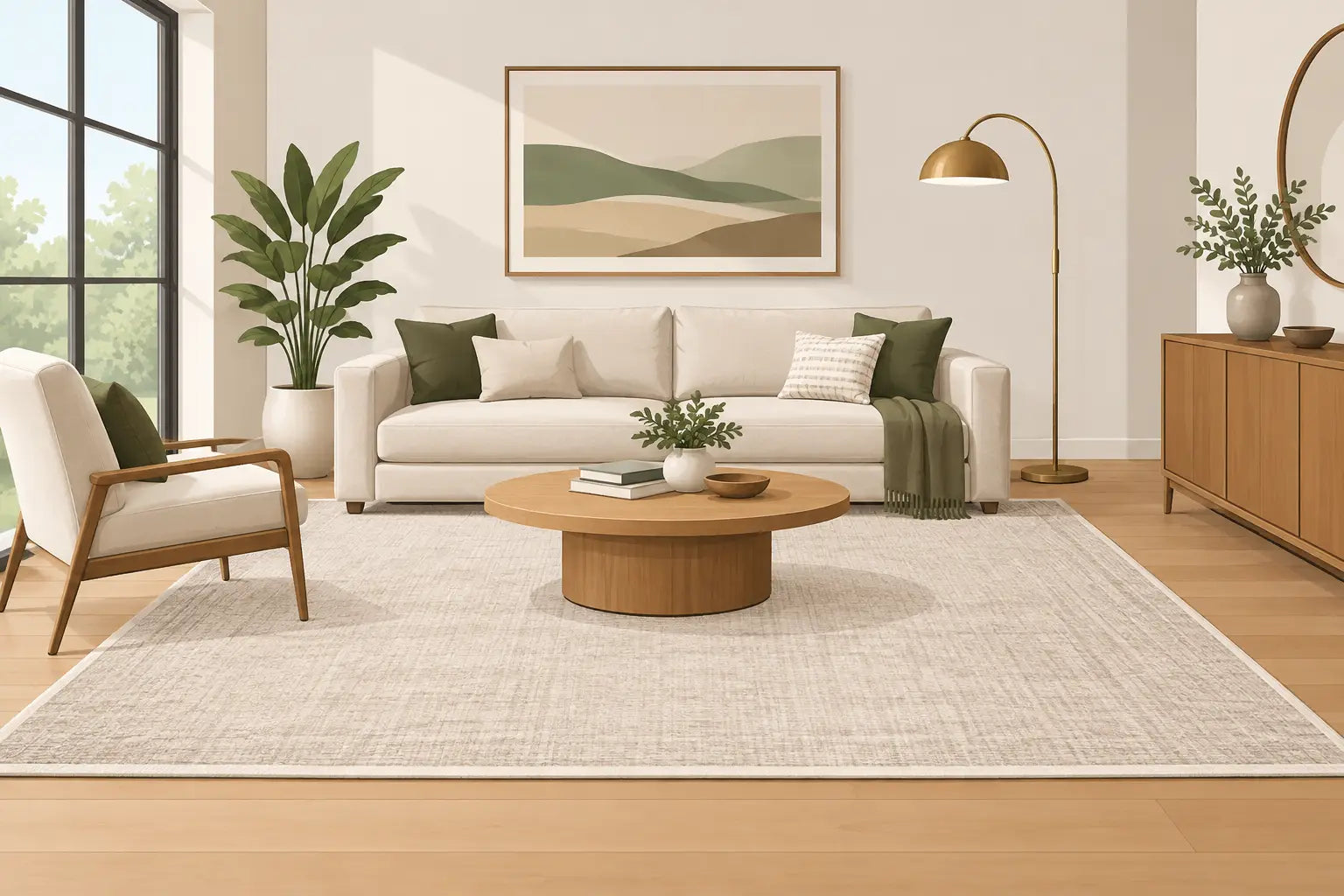
A rug that stops short of the furniture can make an otherwise beautiful room feel unfinished. In a large living room, especially, the difference between an 8 x 10 and a 9 x 12 is not merely a few extra inches of wool. It changes how the seating area reads, how open the room feels, and whether the furnishings appear intentionally gathered together. Choosing large area rug sizes is one of the most valuable decisions you can make when furnishing a space.
Hand-knotted rugs bring color, texture, and cultural character to a room, but their scale gives them much of their presence. A gorgeous Persian design or softly faded Oushak can be the visual anchor of a room when it is sized well. When it is too small, even an exceptional rug may feel more like an accent than the statement piece it deserves to be.
What Counts as a Large Area Rug?
In most homes, large area rug sizes begin at 8 x 10 feet, though the right definition depends on the room. An 8 x 10 can feel generously scaled in a compact living room or bedroom, while an open-concept great room may call for a 10 x 14, 12 x 15, or an even larger custom-feeling size.
Common large formats include:
- 8 x 10 feet
- 9 x 12 feet
- 10 x 14 feet
- 12 x 15 feet
- 12 x 18 feet and larger
Large Area Rug Sizes for Living Rooms
The living room is where a large rug most often earns its keep. It defines the conversation area, softens hard surfaces, and creates a visual foundation beneath sofas, chairs, and coffee tables. The best size depends on your furniture layout, not simply the square footage of the room.
The All-Legs-On Layout
For a polished, spacious look, place all major seating pieces fully on the rug. This is often the best choice for a formal living room, a large family room, or a room with furniture floating away from the walls. A 9 x 12 is a frequent starting point, while a 10 x 14 or 12 x 15 may be a better fit for an expansive sectional and additional chairs.
Aim to leave approximately 12 to 18 inches of rug extending beyond the sides of the sofa. The front edge of each chair should sit comfortably on the rug as well. This approach gives a hand-knotted rug the presence of art underfoot, particularly when its border and pattern deserve room to be seen.
The Front-Legs-On Layout
A slightly more flexible option is to place the front legs of the sofa and chairs on the rug, with the back legs on the floor. This works beautifully in medium-to-large rooms where a 9 x 12 would feel crowded but an 8 x 10 has enough reach to connect the furniture.
The important detail is consistency. If the sofa’s front legs sit on the rug, the nearby chairs should generally do the same. The rug should bridge the gap between pieces, rather than float under only the coffee table.
When an 8 x 10 Is Enough
An 8 x 10 can be the right large rug for apartments, townhomes, and living rooms with a sofa against the wall and a modest seating arrangement. It also works well when a fireplace, bay window, or built-in cabinetry limits the available floor area. Do not choose a larger size simply because the room technically allows it. You still want a visible border of flooring around the rug so the layout can breathe.
Dining Room Rug Sizing: Give Chairs Room to Move
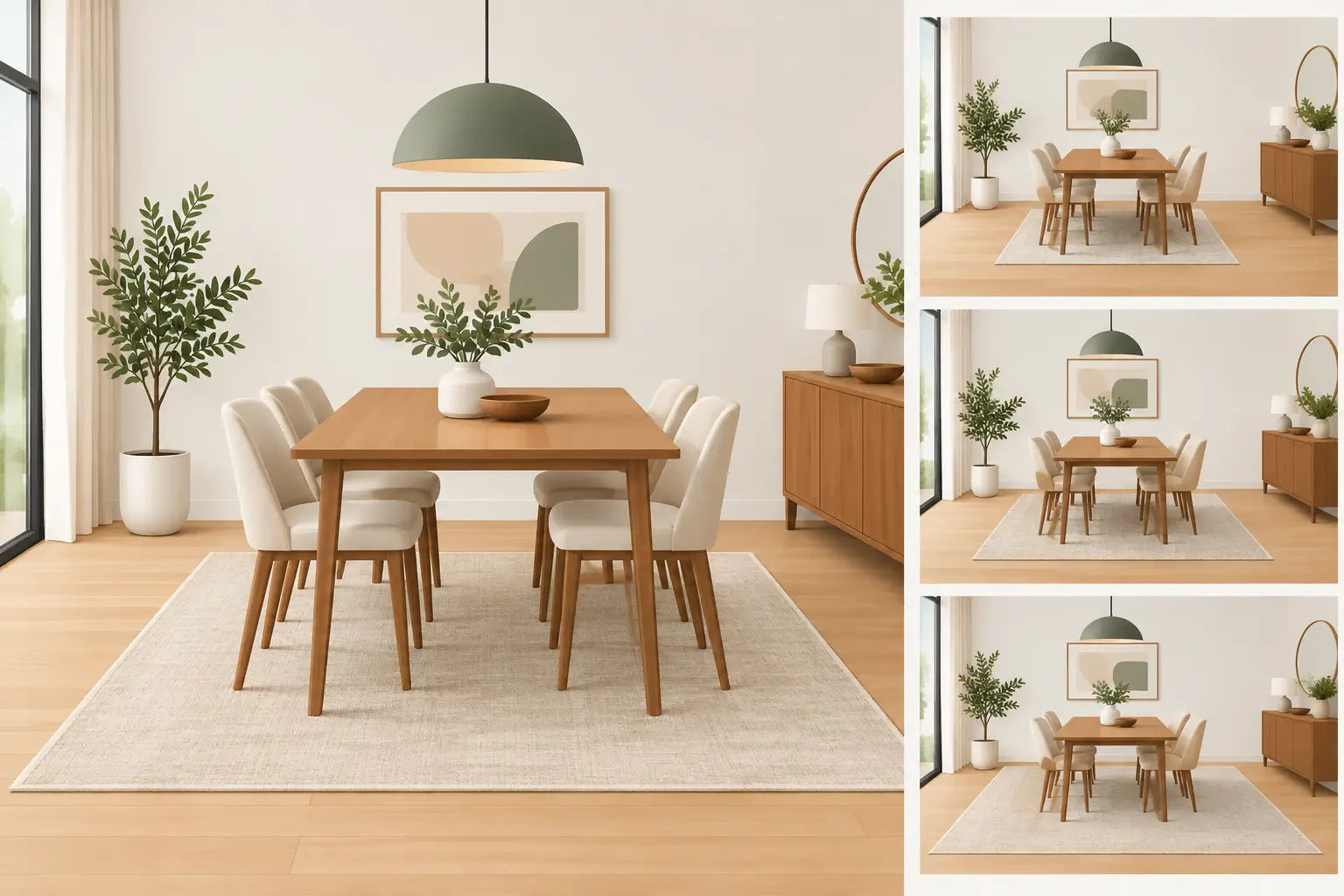
Dining rooms are less forgiving than living rooms because chairs need to remain on the rug when pulled back. A beautiful rug can be frustrating under a table if chair legs catch on its edge every time someone stands up.
Measure the tabletop, then add at least 24 inches on every side. Thirty inches is even better for wider or heavier dining chairs. A table that is 42 x 72 inches, for example, usually needs at least a 9 x 12 rug. A smaller 8 x 10 may work for a narrower table, but test the chair clearance before committing.
Round tables need a round rug only if that is the look you prefer. A rectangular handmade rug beneath a round table can create a lovely contrast, particularly in a dining room with strong architectural lines. What matters most is that the rug is wide enough for every chair at its farthest practical position.
For dining spaces, low-pile hand-knotted wool rugs are a smart choice. Wool has natural resilience and a forgiving texture, while an intricate Persian, Turkish, or Afghan pattern can help camouflage the small realities of everyday meals.
Bedroom Sizes That Feel Generous, Not Crowded
A large rug in the bedroom should greet bare feet where they land, not disappear beneath the bed. For a king bed, a 9 x 12 is often the most balanced choice. It can extend beyond both sides of the bed and provide coverage at the foot, especially when paired with nightstands that remain on the floor.
A 10 x 14 creates a more luxurious effect in a large primary bedroom, particularly if there is a bench at the foot of the bed or a sitting area nearby. For queen beds, an 8 x 10 often works well, while a 9 x 12 is ideal when the room is generous or the bed is positioned away from the wall.
There are two good ways to place the rug. You can set it perpendicular to the bed, beginning just in front of the nightstands, or place it beneath the entire bed and nightstand arrangement. The first method shows more of the rug’s design and often uses space efficiently. The second feels especially substantial but requires a larger size.
If a room’s architecture makes one large rug impractical, two matching runners placed along the sides of the bed are a graceful alternative. Still, a single large handmade rug usually offers a stronger, more cohesive visual statement when the floor plan allows it.
Measure Before You Fall in Love With the Rug
The most reliable sizing tool is painter’s tape. Mark the rug dimensions directly on the floor, then walk around the outline and pull out dining chairs or open drawers as you normally would. This quickly reveals whether a 9 x 12 feels right or whether the room needs a 10 x 14.
Keep these guidelines in mind as you measure. In a living or bedroom setting, try to preserve 8 to 18 inches of exposed flooring around the rug’s perimeter. In a dining room, prioritize chair clearance over an even floor border. For open-concept homes, use the rug to establish a zone, but make sure it is substantial enough to hold every key furniture piece within that zone.
Door swings, floor vents, fireplace hearths, and low cabinet doors matter too. A rug should enrich daily life, not become something you constantly adjust around. If a door crosses the intended rug area, consider a lower-profile weave, revise the placement, or choose a different size.
Pattern, Borders, and the Visual Weight of a Large Rug
Size and design work together. A softly toned Oushak with an open field can make a substantial 10 x 14 feel airy, while a dense, jewel-toned Persian pattern may bring a welcome sense of intimacy to a large room. Neither approach is better. It depends on the architecture, furnishings, and how much visual energy the room already holds.
Bordered rugs deserve enough visible space to show their full composition. If the furniture covers most of the border, a larger size may make the design feel more intentional. Conversely, a bold geometric Kazak, Moroccan, or Kilim-inspired design can hold its own even when more of the rug is covered by furniture.
Color also affects perceived scale. Lighter rugs tend to visually open a room, while deeper indigo, rust, charcoal, and burgundy grounds a broad space with confidence. With authentic wool rugs, the subtle tonal variation in the fibers keeps either choice from feeling flat.
A Better Way to Choose Between Two Sizes
When deciding between two large area rug sizes, choose based on the room’s function first and its appearance second. A dining rug needs chair clearance. A living room rug needs to unite the seating. A bedroom rug needs to provide comfort at the bedside. Once those practical needs are met, let the rug’s pattern, origin, and palette guide the final choice.
A well-sized handmade rug has a quiet way of making the rest of the room look more considered. Give it enough floor to do that work, and it can become the piece your home grows around for years.