Cart
0
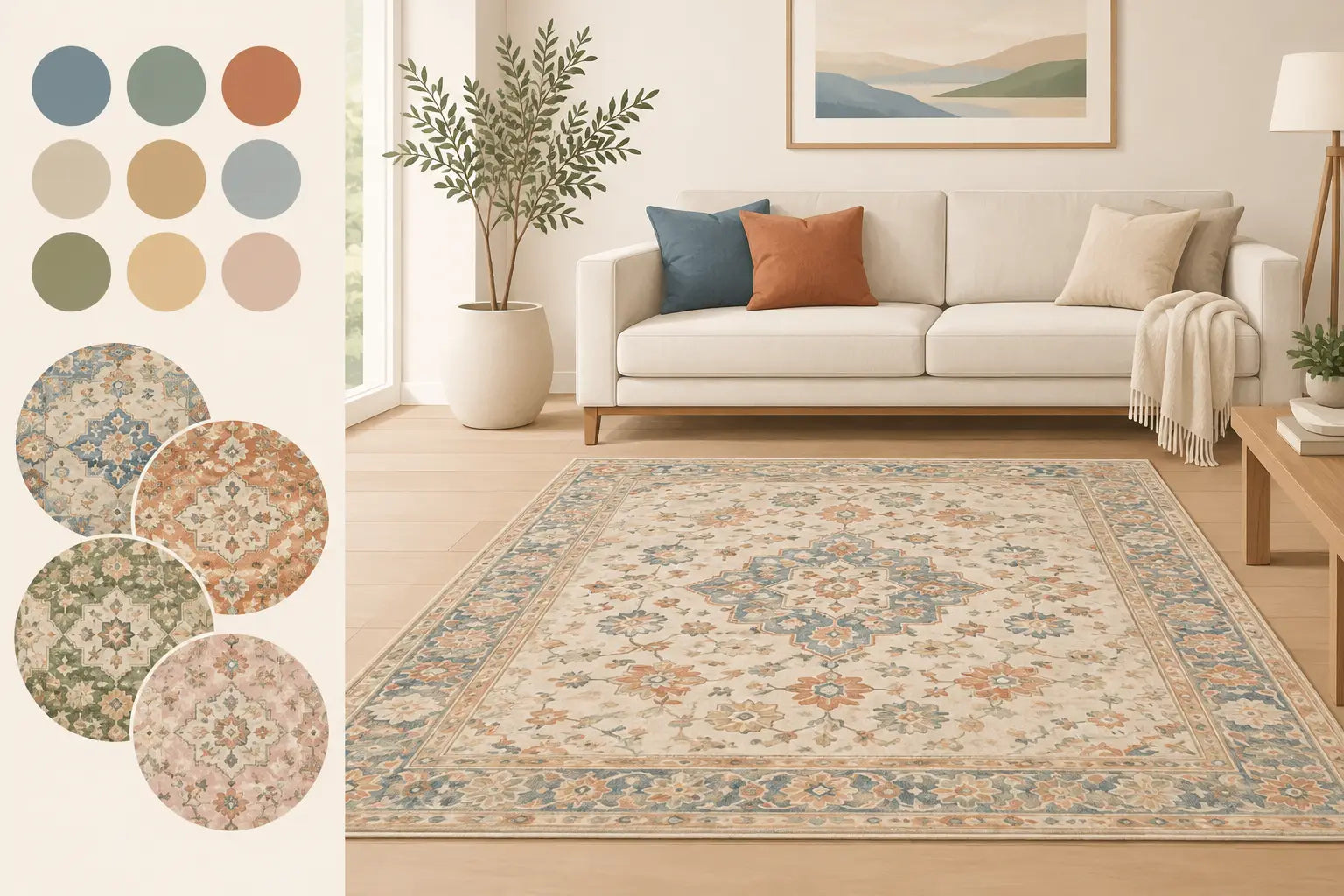
A beautiful Oushak rug can make a room feel finished before the artwork is hung or the final pillow is chosen. The question of how to choose Oushak colors is less about finding a perfect match and more about choosing a palette that gives your home warmth, balance, and a sense of lived-in character.
Authentic Turkish Oushak rugs are especially beloved for their open fields, generous motifs, and softened color combinations. Their colors often feel elegant without being formal: warm ivory, muted blue, faded terracotta, mossy green, sandy gold, blush, and gentle gray all have a place in the tradition. The right choice depends on the room’s light, the visual weight of your furnishings, and how you want the space to feel every day.
Start With the Color That Is Already Working
Before focusing on the rug, look at what you would keep in the room if everything else changed. It may be a favorite sofa, wood flooring, a stone fireplace, painted cabinetry, or even the view through the windows. That element is your most reliable color reference.
A rug does not need to duplicate that color. In fact, the most polished rooms often use a rug to create a gentle contrast. A warm walnut dining table, for example, can look stunning over an Oushak with a soft blue or pale sage field. The cooler rug gives the wood more presence while its warm border details keep the pairing inviting.
If your sofa is a neutral linen, cream boucle, camel leather, or soft gray, you have room to let the rug lead. A faded terracotta and blue Oushak can provide the color story for the entire room without overwhelming it. With a strong sofa color, such as navy, emerald, rust, or charcoal, an ivory or oatmeal field may give the room needed breathing room.
How to Choose Oushak Colors by Room Light
Light changes every rug. Wool has natural depth and a subtle luster, so an Oushak’s colors can look different in morning sun, afternoon shade, and evening lamplight. This is one reason hand-knotted rugs have such lasting visual appeal: their tones are rarely flat.
In a bright, sun-filled room, pale Oushaks in ivory, soft gold, washed denim, or blush can feel airy and quietly luxurious. The trade-off is that very light fields may show everyday marks more readily in a busy entry or a home with young children and pets. A design with a more active allover pattern or a deeper border can be a practical choice while preserving that light, open look.
For rooms with limited natural light, avoid assuming that every pale rug will brighten the space. A cool ivory may read gray in a north-facing room, while a creamy field with warm tan, peach, and muted gold accents can make it feel more welcoming. Dusty blue and sage are also lovely in dimmer spaces when balanced with warm neutrals rather than stark white walls.
If you mainly use a room at night, consider the lighting you actually have. Under warm bulbs, terracotta, apricot, tobacco, and golden beige tend to become richer. Blue can become moodier and more dramatic. Viewing a rug in several lighting conditions is always wise, especially when choosing between two close colorways.
Respect the undertone of your fixed finishes
White walls are not all the same. Some lean warm and creamy; others are crisp, bluish, or gray. The same is true of flooring. Oak may have honey, pink, or neutral undertones, while gray-toned floors can range from taupe to cool charcoal.
An Oushak does not have to match those undertones exactly, but it should not make them appear accidental. With warm floors and creamy walls, look for rugs with ivory, sand, antique gold, terracotta, or faded indigo details. In a cooler home with slate, marble, or blue-gray paint, a soft gray-blue or pale green Oushak can look beautifully intentional. Adding a little warmth through the rug’s border or minor motifs keeps a cool room from feeling austere.
Choose a Field Color Before Studying the Details
When shopping for an Oushak, begin with the field color: the large background area behind the design. It has the greatest influence on the room from across the space. Border colors and floral motifs matter, but they should refine your decision rather than drive it.
An ivory, beige, or pale gold field is a classic choice for homes that need softness and flexibility. These rugs work beautifully with traditional, transitional, coastal, and modern interiors because they introduce pattern without adding visual heaviness. They are especially useful beneath a dining table, where chairs may cover much of the rug and you want the room to remain open.
Blue-field Oushaks offer a calm but memorable alternative. A faded sky or denim blue works well with natural oak, painted furniture, brass, linen, and leather. Deeper blue can ground a larger living room, particularly when the upholstery is light. If you are worried about a blue rug feeling too cool, look for one with warm camel, rust, or buttery accents in the pattern.
Terracotta, coral, and apricot Oushaks bring immediate warmth. They are a natural fit for homes with warm woods, plaster walls, aged brass, and collected furnishings. Their colors can be vibrant, but many Oushaks present them in softened, antique-inspired shades that feel timeless rather than trendy.
Sage, moss, and muted olive fields suit homeowners who want color with a quiet presence. They pair well with walnut, black accents, creamy upholstery, and natural textures such as linen, rattan, and ceramics. Green is also wonderfully forgiving in family spaces because it has enough depth to disguise minor daily wear while still feeling fresh.
Let Pattern Scale Guide the Color Decision
Color and pattern cannot be separated in an Oushak. The familiar oversized flowers, palmettes, and vines are part of what gives these rugs their relaxed grandeur. A pale rug with a large, open design may feel calmer than a darker rug with small, densely repeated motifs.
In a compact room, an Oushak with a lighter field and a more open pattern can make the floor feel less crowded. This does not mean small rooms must have pale rugs. A deeper blue or green rug can create a wonderfully cozy library, bedroom, or den when the furniture and walls are kept simple.
Large rooms can accommodate stronger contrast and more color movement. A spacious living area with neutral upholstery may benefit from an Oushak that combines several tones - perhaps faded blue, brick, gold, and ivory - to prevent the floor from disappearing beneath the furniture. If your room already includes patterned drapery, bold artwork, or expressive wallpaper, choose a rug with fewer competing colors and an easier-to-read field.
Use Existing Accent Colors, but Do Not Overmatch
A common mistake is selecting a rug only because it contains the exact blue of a throw pillow or the exact green of a vase. Small accessories are easy to replace; a hand-knotted wool rug is a more enduring investment. Let the rug connect with your room, but do not let temporary accents dictate the decision.
A useful approach is to repeat one or two rug colors elsewhere in the room. If your Oushak has dusty blue details, add a blue lumbar pillow, a piece of art with a related note, or a pair of ceramic lamps. If it includes terracotta, a warm wood table or rust-toned textile may be enough. Repetition creates harmony, while exact matching can make a room feel overly coordinated.
It also helps to think in terms of temperature. If the rug is predominantly cool, bring in warm wood, aged brass, or caramel leather. If it is predominantly warm, use a little blue-gray, black, or crisp white to give the room definition. The most inviting spaces usually have both.
Consider Real Life Alongside Style
The palest Oushak may be your favorite visually, but a high-traffic front hall, a breakfast area, or a home with an energetic dog may call for a little more pattern and color. Wool is naturally resilient and forgiving, yet every household has different demands.
For busy spaces, consider a rug with a medium-toned field, layered motifs, and a border that does not show every small mark. Blue, green, tobacco, terracotta, and multicolor designs tend to be practical choices. In a quieter bedroom or formal sitting room, a delicate ivory-and-blush Oushak can be a gorgeous choice with fewer compromises.
Remember that handmade rugs vary beautifully from piece to piece. Small shifts in dye, abrash, or color saturation are not flaws. They are evidence of artisan workmanship and contribute to the depth that machine-made rugs often cannot recreate. Product photography is helpful, but it is worth asking for guidance when you are deciding between close shades or trying to coordinate with a specific finish.
Trust the Rug That Gives the Room a Point of View
The best Oushak color is not always the safest one. If your room is filled with neutral furniture and you find yourself drawn to a faded blue, sage, or terracotta field, that rug may be the element that gives the space its identity. A hand-knotted Oushak should feel at home with your furnishings, but it can also bring a layer of history, artistry, and quiet confidence that the room did not have before.
At Belmont Rugs, we encourage shoppers to look beyond a single color and consider the complete effect: wool texture, scale, border, craftsmanship, and the way a rug will live in the home. Choose the palette that still feels beautiful after the first impression has passed, and you will have a piece that welcomes you back to the room for years to come.