Cart
0
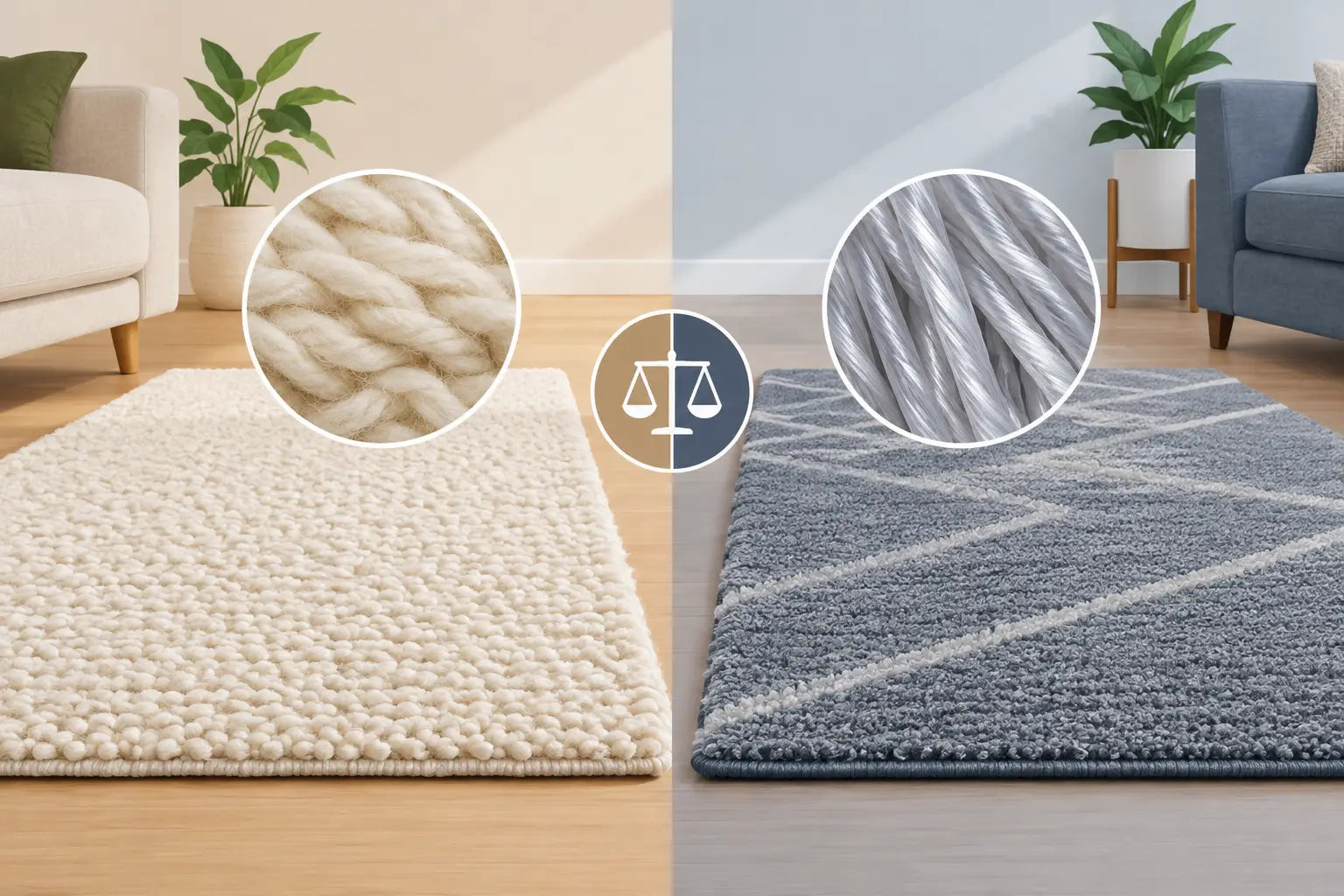
A rug can look perfect in a product photo and still disappoint the moment you walk across it barefoot, pull a dining chair over it, or see how it handles a busy hallway. The choice between wool versus synthetic rugs affects much more than price. It shapes how a room feels, how the rug ages, how it responds to everyday life, and whether it remains a piece you enjoy years from now.
For many homes, synthetic rugs make practical sense in the short term. But a well-made wool rug offers a different kind of value: natural warmth, remarkable resilience, visual depth, and craftsmanship that becomes more compelling with time. The best choice depends on your room, lifestyle, expectations, and how long you want the rug to stay in your home.
Wool Versus Synthetic Rugs: The Essential Difference
Wool is a natural fiber sheared from sheep. It has been used in hand-knotted rugs for centuries because it is strong, springy, soft underfoot, and receptive to rich color. In a quality handmade rug, wool is not merely a surface material. It is part of a tradition of weaving, knotting, and design that gives each piece character.
Synthetic rugs are made from manufactured fibers, most often polypropylene, polyester, nylon, or blends. These materials can imitate the look of wool at a lower price point, and many are designed for easy cleaning and casual use. They are widely available in machine-made constructions and can be a sensible option when a room needs a quick, inexpensive update.
The difference becomes clearer over time. Wool tends to develop a gentle patina and retain its texture, while many synthetic fibers can flatten, shed their original finish, or show wear in high-traffic areas. That does not make every synthetic rug a poor choice. It simply means the materials are built for different priorities.
Why Wool Feels Different Underfoot
A wool rug has a natural softness that is hard to duplicate. Its fibers have a slight crimp, allowing them to compress and bounce back rather than feeling flat or plastic-like. This gives wool a comfortable, cushioned quality in bedrooms, living rooms, and spaces where people gather on the floor.
Wool also helps create the warm, grounded feeling homeowners often want from a room. In an airy neutral living room, an Oushak or Moroccan wool rug can add texture without making the space feel busy. In a traditional dining room, a Persian or Afghan design can bring depth, color, and a sense of permanence.
Synthetic fibers vary widely. A higher-quality synthetic rug may feel pleasantly soft, especially when new, but it usually lacks the organic variation and substantial hand of wool. For a room where texture is a central part of the design, that distinction is easy to notice.
Durability Is More Than a Marketing Claim
Quality wool is naturally resilient. The fibers recover well from furniture weight and regular foot traffic, which is one reason wool has remained a trusted choice for hand-knotted rugs. A wool rug placed in a living room, entry, or hallway can serve a household beautifully for decades when it is properly made and reasonably cared for.
Hand-knotted construction matters here. Each knot is tied individually, creating a dense foundation that supports the pile and allows the rug to wear gradually rather than fail all at once. A handmade wool rug may show gentle signs of a life well lived, but that aging often adds charm rather than taking away from its beauty.
Synthetic rugs can be durable in their own way, particularly polypropylene styles intended for outdoor spaces, playrooms, or temporary high-use areas. They are often resistant to moisture and staining. Still, the pile may crush under heavy furniture, and machine-made backings can wear out or separate before the surface does. If your goal is a rug that can move with you, become part of your home, and remain beautiful through changing décor, wool generally offers stronger long-term potential.
Stains, Spills, and Everyday Care
One of wool's most useful qualities is its natural protective outer layer. Wool fibers resist water-based spills better than many people expect, giving you time to blot a fresh spill before it settles in. The key is to act promptly: blot with a clean, absorbent cloth, avoid rubbing, and skip harsh cleaners that can damage natural fibers or alter color.
Wool also holds less static electricity than synthetic materials, so it tends to attract less dust from the air. Routine vacuuming without an aggressive beater bar, occasional rotation, and professional washing when needed can keep a wool rug looking wonderful for years.
Synthetic rugs are often easier to spot-clean, particularly when they are labeled for indoor-outdoor use. This can make them appealing beneath a child's craft table, in a mudroom, or in a rental where a low initial investment is the main concern. Yet easy cleaning is not always the whole story. Some synthetic fibers can hold oily stains, and strong cleaning products may leave behind residue that attracts dirt.
For a dining room or family room, many households find wool to be entirely manageable. A rug pad, sensible spill response, and regular care go a long way.
Color, Pattern, and Visual Depth
This is where handmade wool rugs have a special advantage. Wool absorbs dye beautifully, allowing for nuanced shades, subtle abrash, and details that feel alive rather than printed. A hand-knotted Turkish Oushak may have soft blues, warm ivory, faded rose, and earthy accents that work together with an ease that is difficult to manufacture.
In Persian, Kazak, Indian, and Chinese designs, wool also brings definition to the pattern. The motifs can be intricate, but the surface still feels inviting and dimensional. Even a more contemporary fish-design rug gains visual movement from the pile, color variation, and the hand of the maker.
Synthetic rugs can offer bold pattern and trend-driven color at an accessible price. Their designs are often printed or machine-woven with precision, which may suit a very graphic or short-term look. However, they rarely achieve the same depth, irregularity, and natural tonal shifts found in authentic handmade wool.
Cost: Initial Price Versus Lasting Value
Synthetic rugs usually cost less upfront. That can be the right answer for a first apartment, a temporary home, a room expected to change soon, or a space where a rug is likely to face extreme messes. There is no need to force an heirloom-level purchase into every corner of the home.
A wool rug, especially a hand-knotted one, asks for a larger initial investment because of its material, labor, and artistry. It is also a piece with a longer view. Rather than replacing it every few years, you may keep it through several furniture arrangements, paint colors, and moves. Its design can anchor a room even as the rest of the décor evolves.
At Belmont Rugs, the focus is on helping shoppers see that value clearly: authentic imported rugs are not simply floor coverings. They are functional works of textile art chosen for their construction, beauty, and ability to make a room feel finished.
Which Rug Is Right for Your Room?
Choose a wool rug when you want lasting comfort, natural texture, rich color, and a piece with genuine decorative presence. It is especially well suited to living rooms, bedrooms, dining rooms, libraries, hallways, and entryways where a rug is meant to be seen and enjoyed every day.
Choose a synthetic rug when immediate stain resistance, a lower starting budget, or short-term flexibility matters most. It can be a practical fit for certain utility spaces, outdoor areas, or homes where the rug's role is purely temporary.
There is also room for both. A homeowner may choose a gorgeous hand-knotted wool runner for the front hall and a washable synthetic rug near an exterior door. The decision does not need to be all or nothing. It should reflect how each room is used and what you want it to feel like.
When you are deciding, picture the rug after the newness has worn off. If you still want to admire its texture, color, and workmanship ten years from now, wool is often the material that rewards the choice.