Cart
0
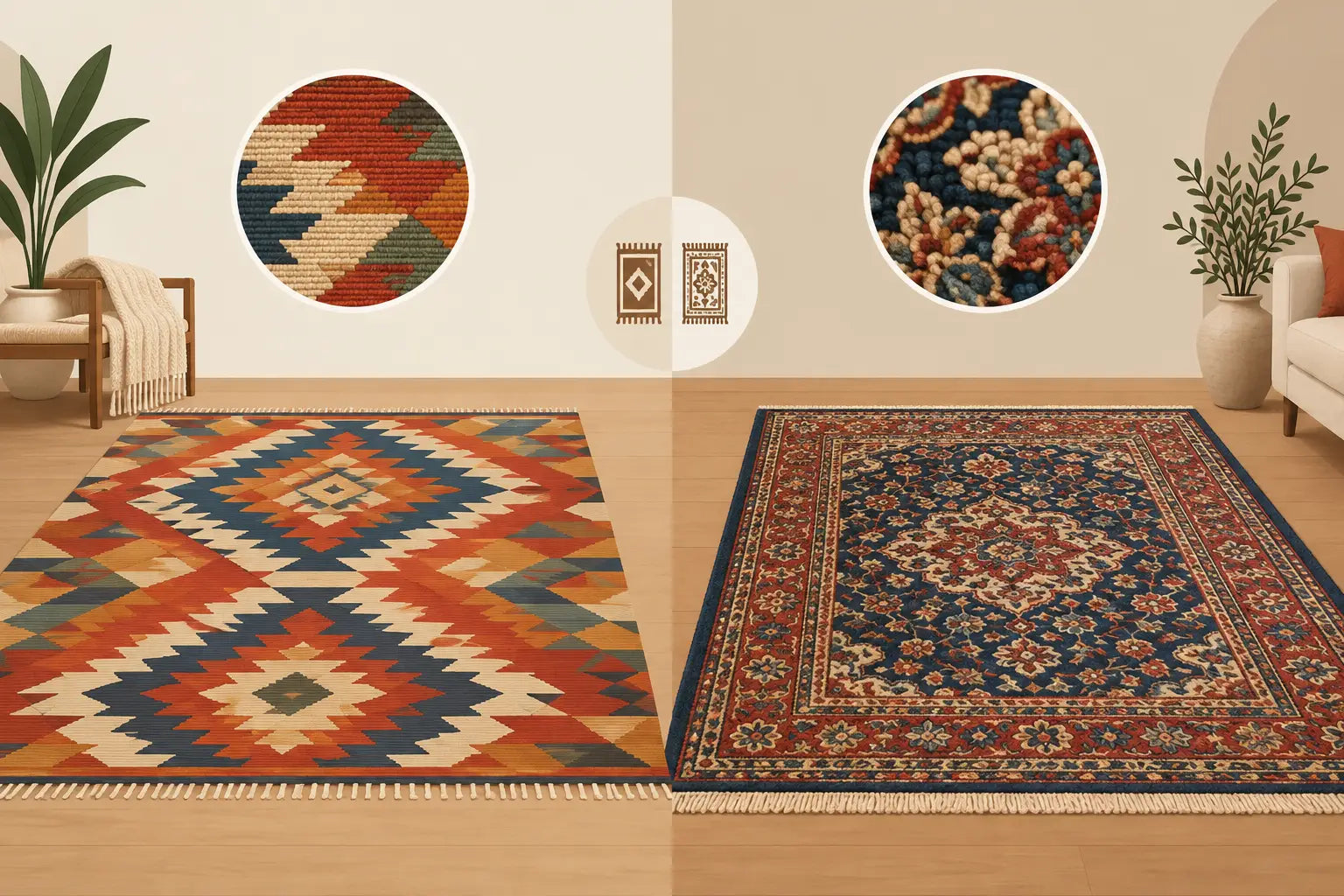
A kilim rug versus hand knotted rug comparison starts with a detail you can feel underfoot: one is typically a flatwoven textile, while the other has individually tied knots that create a pile. Both can be authentic handmade rugs with a rich cultural history, beautiful natural wool, and lasting design appeal. But they perform differently in a room, and choosing well comes down to how you want the rug to look, feel, and live in your home.
For a hallway that needs a low-profile runner, a colorful kilim can be an inspired choice. For a living room where bare feet and softness matter, a hand-knotted wool rug may be the better fit. Neither construction is automatically superior. Each has a distinct purpose, character, and value.
Kilim Rug Versus Hand Knotted Rugs: Start With Construction
A traditional kilim is made on a loom by interweaving horizontal weft yarns through vertical warp yarns. The design is created as the weaver works, often using a slit-weave technique that produces crisp, geometric motifs and a reversible surface. Because there is no raised pile, a kilim lies relatively flat and has a lighter, more streamlined feel.
A hand-knotted rug is built knot by knot. A weaver ties short lengths of wool, silk, or another fiber around the foundation threads, then secures each row with weft yarns. After the rug comes off the loom, its pile is trimmed and finished. This labor-intensive process creates the plush surface associated with Persian, Oushak, Afghan, Kazak, Moroccan, and many other traditional rug styles.
The terminology matters because “handmade” covers more than one construction method. A kilim is handmade, but it is generally handwoven rather than hand-knotted. A hand-knotted rug is also handmade, yet it delivers texture and depth in a way a flatweave cannot. When shopping, asking about construction helps ensure you are comparing similar pieces and paying for the craftsmanship you expect.
How They Look and Feel in a Room
Kilim rugs have a graphic, tailored presence. Their flat surface lets pattern take center stage, whether you prefer bold tribal geometry, earthy stripes, or a quieter neutral design. They are especially appealing in rooms that need movement and color without extra visual weight. A kilim can bring life to an entryway, kitchen, home office, or layered living room without making the floor feel crowded.
Hand-knotted rugs offer a more dimensional finish. The pile catches light differently across the surface, softens the room acoustically, and adds a comfortable layer underfoot. Even a low-pile hand-knotted rug tends to feel more substantial than a kilim. In a bedroom, den, or main seating area, that tactile warmth can make a major difference.
Design style also plays a role. Kilims are often a natural match for modern, bohemian, Southwestern, collected, and relaxed transitional interiors. They can also look striking beneath a clean-lined dining table or paired with traditional wood furniture for contrast. Hand-knotted rugs are remarkably versatile, from graceful Turkish Oushaks and finely detailed Persian designs to casual Moroccan patterns and contemporary fish motifs. Their pile gives them a more traditional sense of richness, even when the design itself is simple.
Durability Depends on the Room, Not Just the Rug
It is easy to assume that a thick hand-knotted rug will always outlast a flatwoven kilim. In reality, placement matters as much as construction. A well-made wool kilim can serve beautifully in a busy space because its flat structure does not crush under foot traffic. It is also easy to move, turn, and layer.
However, a kilim’s woven face is exposed. Repeated friction, pet claws, and furniture legs can eventually wear the yarns or pull the weave. Use a quality rug pad to reduce slipping and protect the foundation, especially on hardwood or tile. In a high-traffic hallway, a kilim runner with sturdy wool and a well-made weave can be practical, but it deserves regular inspection for loose ends or snags.
Hand-knotted wool rugs are known for exceptional longevity when they are made with quality materials and cared for properly. Individual knots create a dense, resilient surface that can withstand decades of use. The pile may gradually develop a gentle patina, which is part of the appeal of an authentic rug. Still, density, wool quality, pile height, and finishing all affect durability. A finely made hand-knotted rug is an investment, not an indestructible object.
For dining rooms, both styles can work. A low-profile kilim makes it easier to slide chairs in and out, while a low-pile hand-knotted rug offers more cushioning and visual depth. Choose a size that extends beyond the table on all sides, so chairs remain on the rug when pulled back. In either case, a pad adds stability and helps prevent uneven wear.
Cost, Value, and What You Are Buying
Hand-knotted rugs generally command higher prices because knotting takes significant time and skill. Knot density can be very high, and larger rugs may require many months of work. The result is a substantial, heirloom-quality textile that can become more personal and beautiful through years of use.
Kilim rugs are often more accessible in price, though exceptional antique, vintage, or finely woven pieces can be highly collectible. Their value lies in artistry, regional design traditions, natural materials, and the skill required to create clean, balanced patterns on a loom. A genuine kilim is not a lesser version of a pile rug. It is a different kind of textile with its own visual language.
The right question is not simply, “Which costs less?” Ask which rug will serve the room for the long term. If you want a statement piece with softness, intricate detail, and enduring presence, hand-knotted construction often justifies the investment. If you need a flexible, colorful layer for a narrow space, a casual room, or a spot where doors and chairs need clearance, a kilim may offer excellent value.
Care Differences That Matter Day to Day
Both rug types benefit from regular, gentle care. Rotate the rug periodically to distribute sun exposure and foot traffic. Address spills promptly by blotting with a clean, absorbent cloth rather than rubbing. Natural wool has useful stain resistance, but fast attention is always best.
Vacuum a hand-knotted rug using suction without an aggressive beater bar, particularly if it has fringe. For a kilim, vacuum gently on a low setting and avoid pulling at the fringe or catching the edge of the weave. Because kilims are reversible, some owners turn them from time to time for a fresh look and more even wear, provided both sides are in good condition.
Professional washing is the safest route for significant spills, odor, or deep soil. Avoid harsh household cleaners, steam treatments, and soaking a rug at home. The fibers, dyes, and foundation deserve treatment that respects handmade construction.
Choosing the Best Rug for Your Space
Choose a kilim when you want a low-profile rug with graphic pattern, easy layering potential, and an airy feel. It is particularly well suited to entryways, runners, kitchens, offices, and rooms where a door swings over the rug. It can also be the perfect choice when your furniture already has plenty of texture and you want the floor to provide color without more pile.
Choose hand-knotted when comfort, depth, and long-term presence are priorities. A hand-knotted wool rug can anchor a living room, make a bedroom feel warmer, or bring a refined finish to a dining room. It is also a wonderful option when you are looking for nuanced color, intricate pattern, and a piece that feels as much like art as décor.
At Belmont Rugs, the most rewarding choices often come from seeing how construction, color, dimensions, and room function work together. A gorgeous rug should fit your life as naturally as it fits your design vision. Let the room tell you what it needs: a flatwoven kilim for crisp practicality, or a hand-knotted rug for softness, depth, and a lasting sense of home.