Cart
0
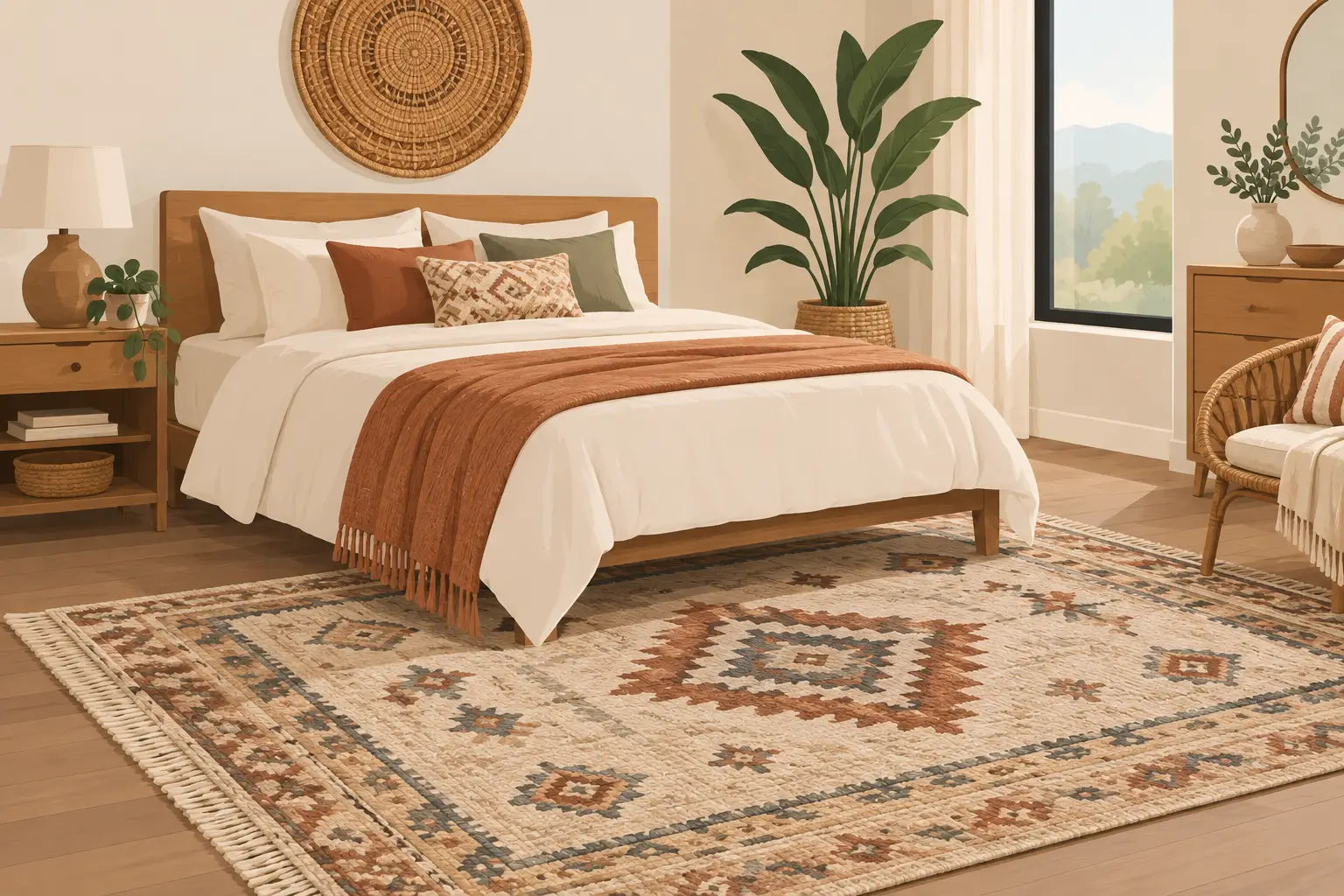
A bedroom should feel like the most personal room in the house, not the last room furnished. Boho wool rugs for bedrooms bring in the softness, color, and relaxed character that make a bed, dresser, and a few favorite objects feel like a finished retreat. Underfoot, real wool adds a welcome layer of comfort on cool mornings. Visually, its natural texture keeps the room from feeling overly matched or flat.
The best boho look is not about piling on patterns or buying everything at once. It is about choosing pieces with a sense of story. A handmade wool rug with a subtle tribal motif, faded geometric design, or warm, earthy palette can give a bedroom that collected feeling while still working with the furniture you already own.
Why wool belongs beside the bed
Wool is one of the most practical materials for a bedroom rug because it feels luxurious without being delicate. Its fibers have a natural spring, so a quality wool rug has cushion and body underfoot rather than the thin, slick feel of many machine-made alternatives. Wool also handles everyday use well, especially in a bedroom where foot traffic is usually lighter than in an entryway or family room.
For a room meant for rest, the material matters as much as the design. Wool has a soft, warm hand and a naturally varied texture that makes color look richer. In a cream-and-tan rug, for example, the fibers may reveal small shifts in tone that give the surface depth. Those variations are part of the appeal of a handmade piece, not a flaw to be corrected.
A hand-knotted wool rug can also be an enduring decorative investment. Its construction, knot work, and wool quality help it wear gracefully over time. A flatter woven Kilim may be the right fit if you prefer a casual, low-profile look, while a thicker hand-knotted rug offers more plushness and visual presence. Neither is automatically better. The right choice depends on the room’s floor plan, the height of the bed, and how much softness you want underfoot.
Choosing the right size for a bedroom
Size is where a beautiful rug either grounds the room or gets lost beneath it. In bedrooms, shoppers often buy too small because they focus on the open floor instead of the full bed arrangement. The rug should relate to the bed, nightstands, and walkways, not simply fill an empty spot.
For a queen bed, an 8 by 10 rug is often the most balanced starting point. Place it perpendicular to the bed so it extends beyond both sides and the foot, leaving a generous landing area when you get up. A 6 by 9 can work in a more compact room, particularly when the rug begins just in front of the nightstands, but it will create a more tailored and less expansive effect.
For a king bed, a 9 by 12 usually provides the proportion the room needs. It allows the rug to reach past the nightstands and creates an intentional frame around a large bed. In a smaller primary bedroom, an 8 by 10 may still work if the rug starts beneath the lower two-thirds of the bed rather than running all the way to the headboard.
Two runners are a smart alternative when a large area rug is not practical. Place one on each side of the bed to soften the first step of the day while allowing a beautiful wood floor to remain visible. A runner at the foot of the bed can also add color in a narrow room, though it should feel wide enough to hold its own rather than read as a small strip of pattern.
Before choosing, use painter’s tape to outline the rug dimensions on the floor. This simple step shows whether doors will clear the pile and whether the rug gives you enough exposed floor around the perimeter. In most bedrooms, leaving roughly 8 to 18 inches of floor visible at the walls feels comfortable, though larger rooms can accommodate more.
The boho palette: relaxed, not random
Boho style is often associated with warm neutrals, faded reds, desert browns, indigo, olive, terracotta, and soft golden tones. Yet a boho bedroom does not have to look heavily saturated. A pale Moroccan-inspired wool rug with charcoal lines can bring the same easygoing, handcrafted spirit to a white, oak, and linen bedroom.
Start with what is already in the room. If your bedding changes frequently, a rug in ivory, sand, taupe, muted blue, or soft rust gives you flexibility. If your bed and walls are neutral, a more colorful Afghan, Turkish, or tribal-inspired design may become the room’s defining piece. The goal is not perfect matching. A rug with a few colors that gently echo the art, pillows, wood finishes, or curtains will feel considered without becoming predictable.
Pattern deserves the same thoughtful approach. A bold geometric rug can be stunning beneath a simple upholstered bed and quiet bedding. If the bed has a patterned quilt, printed curtains, or a dramatic wallpaper, a lower-contrast rug may give the eye a place to rest. Handmade designs often include small irregularities in line and color, and those details are exactly what keep a room from feeling mass-produced.
Pair texture with a calmer foundation
The boho bedroom is at its best when texture does some of the decorating. A wool rug can sit beautifully with linen bedding, cane or walnut furniture, ceramic lamps, woven shades, and a vintage wood bench. Because these materials already bring interest, you do not need every accessory to compete.
For a more refined version of boho, choose a rug with an open field and a border, or a softly faded allover pattern. This approach preserves the warmth of global, handmade design while giving the room a quieter, more timeless point of view. It is especially effective in primary bedrooms, where rest matters more than visual stimulation.
What to look for in a handmade bedroom rug
Authenticity begins with the details. When comparing boho wool rugs, look beyond a broad style label and consider the construction, materials, origin or design tradition, dimensions, and condition. A hand-knotted rug carries individual craftsmanship in every row of knots, while a handwoven flatweave has its own appealing structure and lighter feel.
Color can look different between a product photograph and your bedroom because of daylight, bulbs, wall paint, and surrounding textiles. Look closely at the secondary colors in the rug, not only the dominant shade. A rug that appears beige may include gray, blush, brown, or pale blue threads that influence how it settles into your space.
Pile height is another useful consideration. A lower pile makes it easier to position furniture and open doors, while a medium pile offers a softer step beside the bed. If you have a platform bed with very low clearance, a flatter rug may be more practical. If your bedroom is large and sparsely furnished, a fuller wool rug can provide the needed warmth and presence.
At Belmont Rugs, each piece is selected with the understanding that a rug is more than a floor covering. It may be the color anchor for a new bedroom, a handmade contrast to modern furniture, or the one item that makes a room finally feel personal. One-of-a-kind rugs are especially rewarding for this reason: the details in your piece will not be repeated throughout every other home.
Caring for wool without overthinking it
Bedroom rugs benefit from simple, regular care. Vacuum with care using suction only when possible, especially around fringe, and avoid aggressive beater bars that can pull at wool fibers. Rotate the rug occasionally so sunlight and foot traffic are distributed more evenly.
For a small spill, blot promptly with a clean, absorbent cloth rather than rubbing the fibers. Use minimal moisture and avoid household cleaners that can leave residue or affect dye color. For deeper cleaning, a professional who understands handmade wool rugs is the safer choice. A rug pad is also worthwhile beneath most area rugs, adding stability and a little extra comfort while helping reduce wear from movement.
A boho bedroom does not need to be perfectly coordinated to feel beautiful. Let the rug establish the room’s warmth, then give it space to be seen. The most memorable bedrooms are often built around one authentic piece that feels good underfoot and even better to come home to.