Cart
0
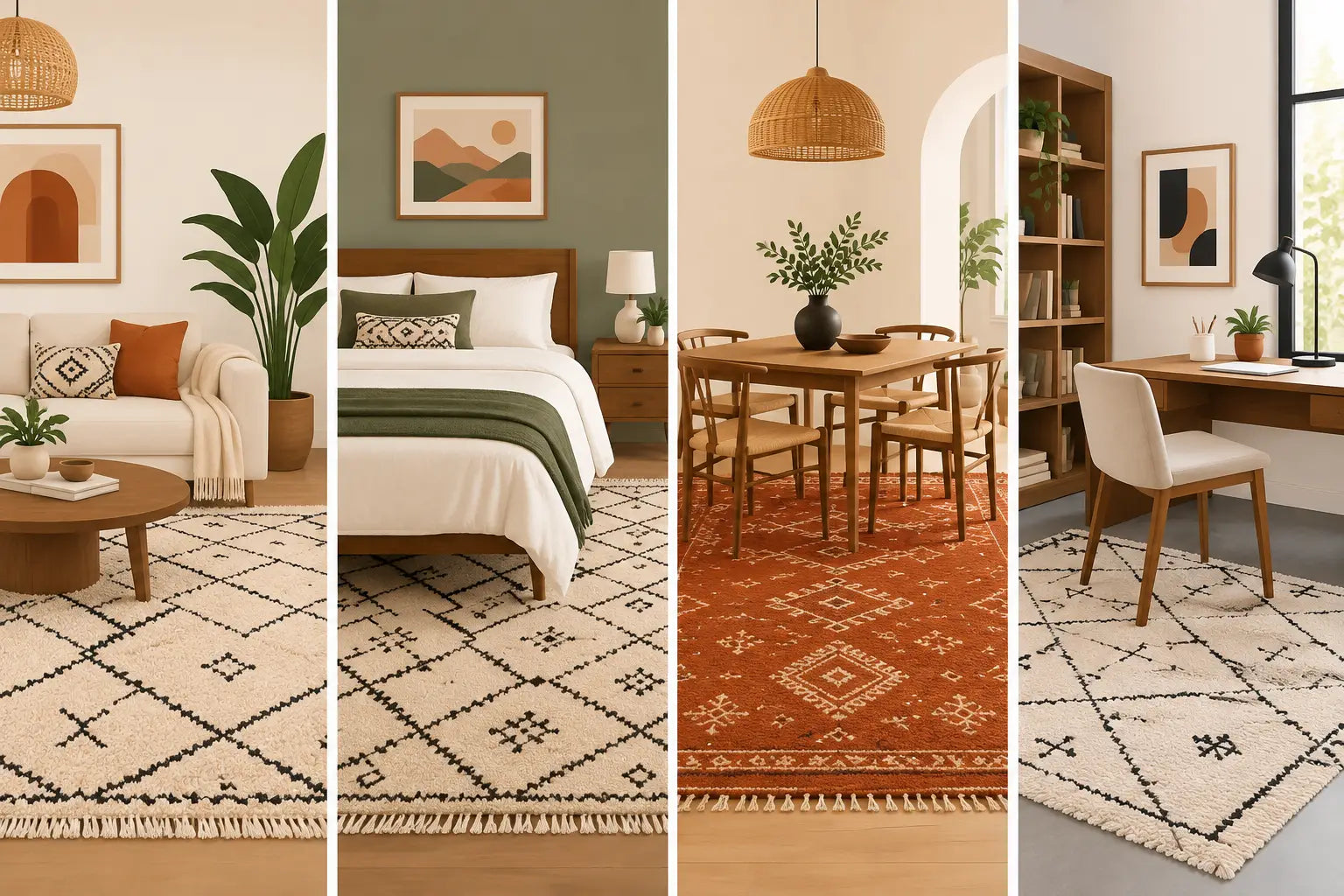
A Moroccan rug can do more than soften a floor. Its wool texture, expressive geometry, and often imperfect-in-the-best-way character can give a carefully furnished room the warmth that polished furniture sometimes lacks. The best Moroccan rug styling ideas begin with that strength: let the rug bring a sense of ease and artistry, then build the room around it rather than treating it as an afterthought.
Authentic handmade Moroccan rugs vary widely. A plush, ivory Beni Ourain-style piece reads very differently from a colorful flatwoven Kilim or a boldly patterned rug with saturated reds, blues, and oranges. There is no single “Moroccan look,” which is precisely why these rugs work in homes ranging from clean-lined contemporary spaces to collected traditional interiors.
Start With the Rug’s Color Story
Before choosing pillows, curtains, or wall color, look closely at the rug’s dominant field and its smaller accent tones. An ivory wool rug with a charcoal diamond design can act almost like a neutral, making it an easy partner for warm oak, linen upholstery, black metal, and soft gray walls. A more colorful Moroccan rug may call for a quieter supporting cast, but it should not force the entire room into a strict color match.
A useful approach is to repeat one or two secondary colors from the rug elsewhere in the space. If a rug includes faded terracotta, try a clay-colored lamp base, a rust velvet pillow, or a framed artwork with a similar warm note. This creates connection without making the room feel overly coordinated.
For a room with existing strong color, consider contrast. A creamy Moroccan wool rug can calm a deep green, navy, or chocolate brown sofa. Conversely, a vivid rug can bring welcome energy to a white or beige room that feels a little too careful. The trade-off is visual intensity: the bolder the rug, the simpler the surrounding upholstery and larger furnishings should be.
Ground a Living Room With Generous Scale
In a living room, Moroccan rugs are most successful when they clearly anchor the seating area. A rug that is too small can make even beautiful furniture appear disconnected. Whenever the room allows, choose a size large enough for the front legs of the sofa and chairs to rest on the rug. In a larger layout, placing all furniture legs on the rug creates an especially finished, welcoming look.
A plush wool Moroccan rug is a natural fit beneath low-profile sofas, leather club chairs, boucle seating, and wood coffee tables. The textural contrast is part of the appeal. Smooth leather and clean-lined walnut furniture gain softness from deep pile, while a glass or metal coffee table allows the rug’s design to remain visible.
If the room already contains pattern through drapery, wallpaper, or upholstered chairs, an ivory-and-black geometric rug offers balance. If the furniture is solid and architectural, a more colorful hand-knotted Moroccan design can become the room’s statement piece. Let one element lead. A room can hold multiple patterns, but they should vary in scale so nothing competes at the same volume.
Pair Modern Furniture With Handmade Texture
Minimal rooms can sometimes feel finished but not personal. A handmade Moroccan rug introduces the subtle variation that factory-made décor often misses. Slight shifts in color, irregular linework, and visible wool texture are not flaws. They are evidence of the hand behind the piece and help a modern room feel lived in.
Try pairing a simple cream sofa with a Moroccan rug, a vintage wood side table, and one sculptural lamp. This combination has depth without requiring a room full of accessories. For homeowners who prefer a more layered look, add woven baskets, linen pillows, or antique brass accents, but leave enough open space for the rug to be appreciated.
Bring Softness to the Bedroom
Bedrooms are ideal for Moroccan rugs because wool brings immediate comfort underfoot. The most traditional placement is beneath the bed, extending beyond both sides and the foot. This gives the bed a proper foundation while ensuring a soft landing each morning.
For a queen or king bed, choose a rug with enough width to show generously on either side. A smaller rug may also work placed at the foot of the bed, especially in a compact room or when the floor is already beautiful hardwood. Two matching or coordinating runners along each side of the bed are another practical option, though they create a more tailored appearance than one large area rug.
Keep bedding relaxed when the rug has a lively pattern. White cotton, oatmeal linen, or a muted quilt lets the floor covering provide the visual interest. In a room with an understated ivory rug, bedding is an opportunity to introduce gentle color through olive, terracotta, dusty blue, or warm brown.
Use a Moroccan Rug to Warm a Dining Room
A Moroccan rug in the dining room can be stunning, but size and pile deserve extra consideration. Dining chairs should remain on the rug even when pulled back from the table. Measure the table and add at least 24 to 30 inches on every side for chair movement. This is one of the most common details shoppers overlook.
Low-pile Moroccan rugs and flatweaves are often the most practical choices here because chairs slide more easily across their surface. A high-pile rug can be beautiful beneath a dining table, but it may catch chair legs or make seating feel uneven. If you love the look of plush wool, save it for a living room or bedroom where comfort matters more than mobility.
Do not be afraid of pattern under a simple wood table. In fact, a geometric rug can make a plain dining set feel far more intentional. Choose durable natural materials for the rest of the room, such as wood, leather, ceramic, and linen, so the space feels warm rather than overly formal.
Make Hallways and Entryways Feel Considered
Runners are an easy way to bring Moroccan character into transitional spaces that are often ignored. A hand-knotted runner can make a long hallway feel like part of the home rather than a route between rooms. In an entryway, it offers a memorable first impression while helping define the arrival zone.
Measure carefully before choosing a runner. Leave a visible border of flooring on both sides, usually several inches, rather than filling the hallway wall to wall. In an entry, make sure doors can open freely and select a construction that suits the traffic the area receives. A lower-pile piece is generally easier for busy pathways, homes with pets, or spaces near exterior doors.
Because these areas are narrow, a more colorful pattern can work especially well. The rug becomes a focused moment of color instead of competing with a full room of furniture. Pair it with a simple console, a mirror, and warm lighting for an entry that feels personal from the first step inside.
Layer With Intention, Not Just Trend
Layering a Moroccan rug over a larger natural-fiber rug can add dimension to a broad living room or bedroom. The larger base, often jute or sisal, establishes scale; the Moroccan piece adds softness and pattern where the eye naturally lands. This is especially useful when a one-of-a-kind rug is slightly smaller than the seating area you need to cover.
The layered look is not right for every home. It can feel too casual in a formal dining room, and thick layers may create a tripping concern in high-traffic areas. Use a rug pad beneath the bottom layer and ensure both rugs lie flat. If the Moroccan rug has exceptional texture or a large-scale design, it may be stronger on its own.
Let the Rug Feel Collected
The most compelling Moroccan rug styling ideas leave room for individuality. Avoid buying every accessory from the same design category or trying to recreate a showroom scene exactly. A Moroccan rug can look gorgeous beside a Persian-inspired pillow, an English antique chest, contemporary art, or a streamlined sectional because handmade pieces carry a human warmth that crosses style boundaries.
At Belmont Rugs, we encourage shoppers to think about a rug as both a functional furnishing and an enduring piece of art. Look for the scale that supports your room, the wool texture that suits your lifestyle, and colors you will still enjoy after the first wave of redecorating excitement has passed.
Choose the piece that makes you pause when you walk into the room. When a rug has that effect, the rest of the styling tends to fall into place naturally.