Cart
0
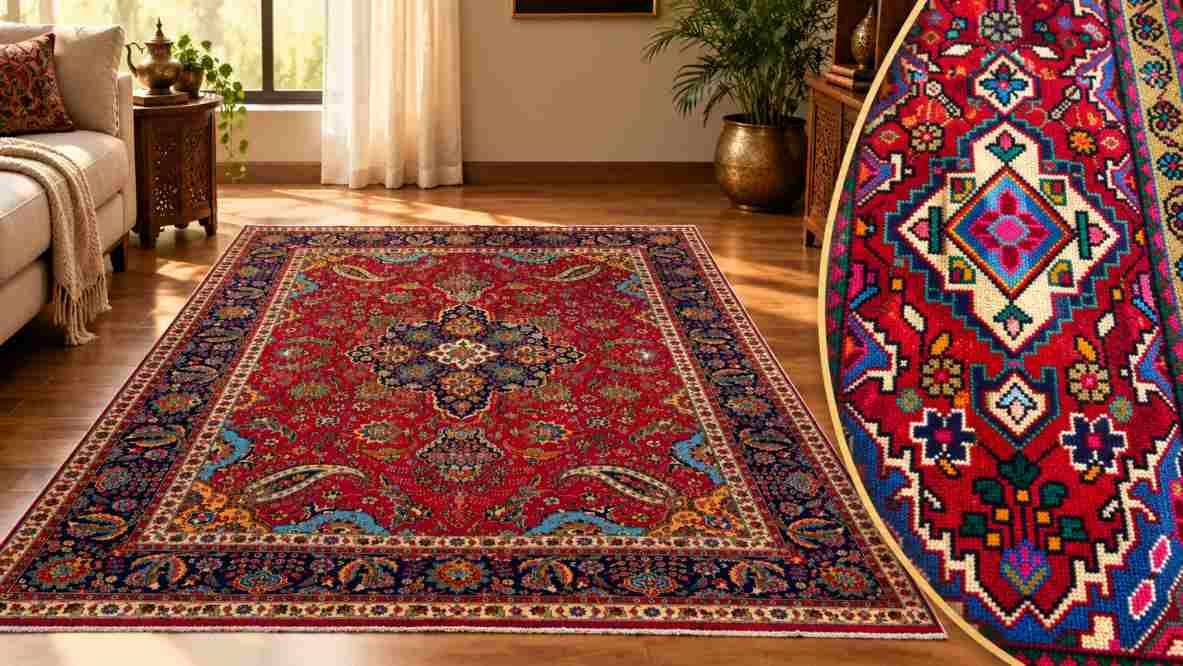
Vintage Persian rugs bring together traditional craftsmanship, distinctive patterns, rich colors, and a history that can make a room feel truly individual. Whether you are furnishing a living room, decorating a formal dining area, or searching for a collectible textile, choosing the right rug involves more than finding a design you love. Understanding its construction, materials, condition, origin, and documented history can help you make a more informed purchase.
However, not every rug with a traditional Persian pattern is an authentic vintage Persian rug. Some are newly made, machine-produced, or inspired by historical designs. Others may be handmade but have limited documentation about their age or place of origin.
If you are searching for vintage Persian rugs, antique rugs for sale, Persian silk rugs, or hand-knotted wool and silk rugs, this guide explains what to examine before buying and which questions to ask a seller.
What Makes a Persian Rug Authentic and Vintage?
An authentic Persian rug traditionally refers to a rug made in Persia, now known as Iran, using regional weaving traditions. Persian rugs are associated with numerous weaving centers, each with its own characteristic designs, materials, and craftsmanship.
The term vintage generally describes a rug that is several decades old, although sellers may use different age ranges. An antique rug is commonly understood to be at least 100 years old. These labels should be supported by credible information about the individual piece rather than appearance alone.
Authenticity, age, and construction are separate considerations. A rug may be genuinely handmade but relatively new. Another may be old without having a confirmed Persian origin. A well-documented rug offers greater confidence because its description explains what is known and identifies any uncertainties.
Before purchasing, look for a detailed product description, clear photographs, measurements, material information, condition notes, and any available provenance or expert assessment.
1. Examine the Back of the Rug
One of the most useful first steps when evaluating a potentially authentic vintage Persian rug is to examine its reverse side.
Traditional hand-knotted rugs are constructed by tying individual knots around the foundation threads. Their backs generally reveal the underlying structure of the weaving, including the arrangement of knots and the way the design is formed.
Look for the following details:
-
Visible individual knots: The reverse should reveal the rug's woven structure rather than a separate printed design.
-
Pattern continuity: The main motifs should generally remain recognizable on the back, although they may appear less vivid than on the pile side.
-
Natural irregularities: Handmade rugs may have small variations in knotting, spacing, or alignment.
-
Foundation construction: Examine the warp and weft threads to understand how the rug was assembled.
Machine-made rugs often display a more mechanically uniform structure and may use a backing material that differs from the pile construction.
However, regularity does not automatically mean a rug is machine-made, and irregularity alone does not prove authenticity. Experienced weavers can produce exceptionally consistent handmade rugs, while some machine-made products imitate traditional patterns convincingly.
If possible, request high-resolution photographs of the back, corners, edges, and fringe before buying antique rugs online.
2. Understand the Difference Between Hand-Knotted and Machine-Made Rugs
Construction is an important factor when comparing vintage Persian rugs with modern alternatives.
Hand-knotted rugs are created by tying individual knots into the foundation. The process requires substantial manual work, and the time involved varies according to the rug's size, knot density, complexity, and weaving technique.
Machine-made rugs use mechanized production methods. They can reproduce traditional Persian motifs and may be suitable for shoppers seeking a particular appearance at a lower price, but they are not equivalent to hand-knotted examples.
When evaluating a rug, consider these characteristics:
Knot structure: Individual knots are usually visible on the back of a hand-knotted rug. Look closely rather than relying on a seller's title alone.
Pattern definition: Fine hand-knotted rugs can display intricate details, but pattern complexity by itself does not establish how a rug was made.
Fringe construction: On many traditional hand-knotted rugs, the fringe consists of the foundation threads extending beyond the woven field. Attached or sewn-on fringe can be a sign of alteration or a different construction method, but repairs and restoration must also be considered.
Edges and sides: Inspect the selvedges for signs of original construction, wear, repair, or replacement.
These details are most useful when considered together. If the construction is unclear, ask the seller for additional images or an explanation of the weaving technique.
3. Check the Materials: Wool, Silk, or a Combination
The material affects a rug's appearance, texture, maintenance requirements, and price. Authentic Persian rugs can be made from wool, silk, cotton foundations, or combinations of these materials.
Hand-Knotted Wool Rugs
Wool is widely used in traditional Persian rugs because it offers resilience, warmth, and a textured appearance. The quality of the wool, the way it was spun, the pile construction, and the rug's condition all influence how it feels and performs.
When considering a vintage wool rug, inspect the pile for thinning, bald patches, uneven wear, and exposed foundation threads. Some surface wear is consistent with age, but excessive deterioration may require costly restoration.
Persian Silk Rugs
Persian silk rugs are prized for their fine details, smooth texture, and distinctive sheen. Silk can reflect light differently depending on the direction of the pile, making colors and motifs appear to change as you view the rug from different angles.
Silk rugs may require more careful handling and specialist cleaning, particularly when they are old or fragile. Ask whether the rug is made entirely of silk or contains silk accents alongside wool.
Hand-Knotted Wool and Silk Rugs
Hand-knotted wool and silk rugs combine the characteristics of both fibers. Wool may form most of the pile, while silk highlights intricate motifs or selected design elements.
For example, Belmont Rugs has listed vintage Tabriz pieces described as approximately 90% sheep wool and 10% silk. This illustrates why buyers should check the specifications of each individual rug instead of assuming all wool-and-silk rugs have the same composition.
Ask the seller how the material information was established and whether the percentages are documented or estimated. Appearance and touch alone cannot reliably establish the exact fiber composition.
4. Learn to Recognize Tabriz Rugs

Tabriz is a historic rug-weaving center in northwestern Iran. Tabriz rugs are known for a wide variety of designs, including intricate floral compositions, medallions, and elaborate all-over patterns.
Some examples feature fine detailing and a relatively high knot density, while others use bolder motifs and a different overall structure. Therefore, no single pattern or knot count can establish that a rug originated in Tabriz.
When evaluating Tabriz rugs, consider:
-
Design characteristics: Examine the arrangement of floral motifs, central medallions, borders, and decorative details.
-
Weaving quality: Inspect the back, knot structure, pile, and overall consistency.
-
Materials: Check whether the rug is described as wool, silk, or a blend.
-
Condition: Review repairs, edge wear, fading, and areas where the pile may have thinned.
-
Origin evidence: Ask what supports the seller's identification of the rug as Tabriz.
Traditional design characteristics can help narrow down a possible origin, but similar patterns may appear in rugs from other weaving centers. A confident attribution should consider construction, design, historical context, and any available documentation.
If you are considering a particular Tabriz rug, request close-up images and a complete description before making a decision.
5. Look Carefully at Age, Wear, and Color
Wear is an important part of evaluating vintage and antique rugs, but it must be interpreted carefully.
Genuine older rugs can show changes caused by years of use, exposure to light, cleaning, and previous repairs. These characteristics may contribute to their appearance, but artificial distressing can also make a newer rug look older.
Examine the pile from several angles. Areas that appear lighter or darker may reflect differences in pile direction rather than actual fading. Compare exposed areas with sections that may have been protected by furniture.
Natural dyes were used in many historical rugs, but not every authentic vintage Persian rug uses only natural dyes. Synthetic dyes have also been used in Persian rug production for generations. Color alone is therefore not a reliable authentication test.
Watch for:
-
Abrupt color differences that may indicate fading, cleaning, or repair.
-
Very thin areas where the foundation is becoming visible.
-
Stains, odors, or signs of water damage.
-
Dry, brittle areas that may need specialist assessment.
-
Evidence of re-piling, patching, or repaired edges.
A vintage rug does not need to be flawless to be desirable. What matters is understanding its current condition, the quality of any restoration, and whether its price reflects those factors.
Suggest to Read:- How to Choose the Perfect Boho Rug for Every Room
6. Request Provenance and Ask the Right Questions
Provenance refers to the documented history of an object, including information about its origin, previous ownership, or relevant transactions. For vintage Persian rugs, useful records may include purchase documents, previous appraisals, expert assessments, or other credible historical information.
Not every old rug has a complete ownership history. A lack of documentation does not automatically mean a rug is inauthentic, but unsupported claims should be treated cautiously.
Before purchasing, ask the seller:
-
What is the estimated age of the rug, and how was it determined?
-
Is the stated weaving origin confirmed or an informed attribution?
-
What materials were used in the pile and foundation?
-
Has the rug undergone repairs, restoration, or color treatment?
-
Are there any stains, holes, worn areas, or structural concerns?
-
Can you provide photographs of the back, fringe, edges, and any damaged areas?
-
Is an independent inspection or additional documentation available?
-
What are the return terms if the rug differs materially from its description?
Written answers help you compare options and understand exactly what you are purchasing.
7. Compare Price, Condition, and Overall Value
When searching for antique rugs for sale, avoid judging value by age or size alone. Two rugs with similar dimensions can differ considerably in materials, weaving quality, rarity, condition, design, and documentation.
A useful comparison should include:
-
Authenticity and attribution: How well supported are the claims about origin and age?
-
Craftsmanship: What does the construction reveal about the weaving?
-
Materials: Is the rug made from wool, silk, or a combination?
-
Condition: How much wear or restoration is present?
-
Size and design: Does the rug suit your intended room and furniture layout?
-
Total purchase cost: Consider shipping, professional cleaning, repairs, and any other applicable expenses.
Be cautious with claims that an antique rug is guaranteed to appreciate in value. Collectible rugs can be desirable, but resale prices and market demand are not guaranteed.
A fairly priced rug with a transparent description and condition report may be a better purchase than a seemingly exceptional bargain supported by vague claims.
8. Choose a Seller Who Provides Detailed Product Information
Buying a vintage Persian rug online can be convenient, but you cannot examine the piece in person before ordering. That makes product transparency especially important.
Look for sellers who provide actual photographs of the individual rug, precise measurements, material details, condition descriptions, and clear purchasing policies. Ask for additional photographs or a walk-around video if the available images do not show enough detail.
Belmont Rugs specializes in individually selected hand-knotted wool rugs and carries vintage and antique carpets from Persia and other weaving regions. Buyers can begin by exploring the Belmont Rugs homepage to understand the store's selection and then browse its Persian Rugs collection to compare available styles.
Read each product listing carefully. Check whether its age is approximate, whether the stated origin is supported by the available information, and whether the description identifies the materials and condition. Because individual rugs are unique, availability can change, and a sold item may no longer be purchasable.
The best buying decision comes from combining a design you genuinely like with clear product information, realistic expectations, and a seller who is willing to answer specific questions.
Frequently Asked Questions
How can I tell if a vintage Persian rug is authentic?
Start by examining its reverse side, knot structure, fringe, edges, materials, and design. Compare those details with the seller's description and request documentation or an independent assessment when needed. No single visual feature proves authenticity on its own.
What is the difference between vintage and antique Persian rugs?
Vintage rugs are generally several decades old, although definitions vary. Antique rugs are commonly at least 100 years old. A rug's age should be supported by a credible assessment rather than appearance alone.
Are Persian silk rugs better than wool rugs?
Neither material is automatically better. Silk can offer a fine texture and distinctive sheen, while wool is valued for its resilience and warmth. The right choice depends on your budget, intended use, maintenance preferences, and the specific rug's condition.
What makes Tabriz rugs special?
Tabriz rugs are associated with a historic Persian weaving center and can feature intricate floral designs, medallions, and detailed borders. Quality, materials, and construction vary, so examine each rug individually rather than relying on the name alone.
Are hand-knotted wool and silk rugs worth buying?
They can be attractive choices for buyers who appreciate craftsmanship, mixed-fiber textures, and intricate detailing. Value depends on authenticity, condition, workmanship, design, and price—not simply the presence of silk.
What should I check before buying antique rugs online?
Review actual product photographs, measurements, materials, estimated age, condition, repairs, shipping costs, and return policies. Request additional images of the back, fringe, and worn areas if necessary, and obtain clarification about any claims that are important to your decision.
Can an authentic vintage Persian rug have repairs or fading?
Yes. Older rugs may have repaired edges, faded colors, or areas of wear. These conditions do not automatically make a rug inauthentic, but their extent and quality can affect its appearance, usability, and value.
Conclusion
Identifying an authentic vintage Persian rug requires more than recognizing a traditional pattern. Construction, fiber composition, weaving characteristics, condition, age, and provenance all help you evaluate a piece more carefully.
Whether you are shopping for antique rugs for sale, exploring Persian silk rugs, or comparing hand-knotted wool and silk rugs, take time to review the details and ask informed questions. Tabriz rugs and other Persian weaving traditions offer a wide range of designs, but each individual rug deserves its own assessment.
With careful research and transparent product information, you can choose a rug that complements your home and reflects the craftsmanship you value. Explore Belmont Rugs to compare available Persian rug styles and find a piece that suits your space, preferences, and budget.
Belmont Rugs
- Address: 11033 Carolina Place Pkwy, Pineville, NC 28134-8370 Booth #1011
- Phone: 253-691-1000
- Email: Info@BelmontRugs.com