Cart
0
A rug can set the entire mood of a room, but the pieces that become part of a home for years tend to have more than a beautiful pattern. The hand knotted wool rug benefits that matter most are felt daily: a softer landing underfoot, richer color, natural warmth, and a construction that can stand up to real life. For a living room, bedroom, dining space, or hallway, a well-made wool rug is both a design decision and a practical investment.
Hand-knotted rugs have been made for centuries across regions including Turkey, Persia, Afghanistan, India, Morocco, and the Caucasus. Each piece carries the visual language of its origin, whether that means the quiet, open fields of an Oushak, the geometric character of a Kazak, or the detailed floral motifs found in Persian designs. When those traditions are paired with quality wool, the result is a rug with remarkable depth, comfort, and staying power.
Why Hand Knotted Wool Rug Benefits Matter
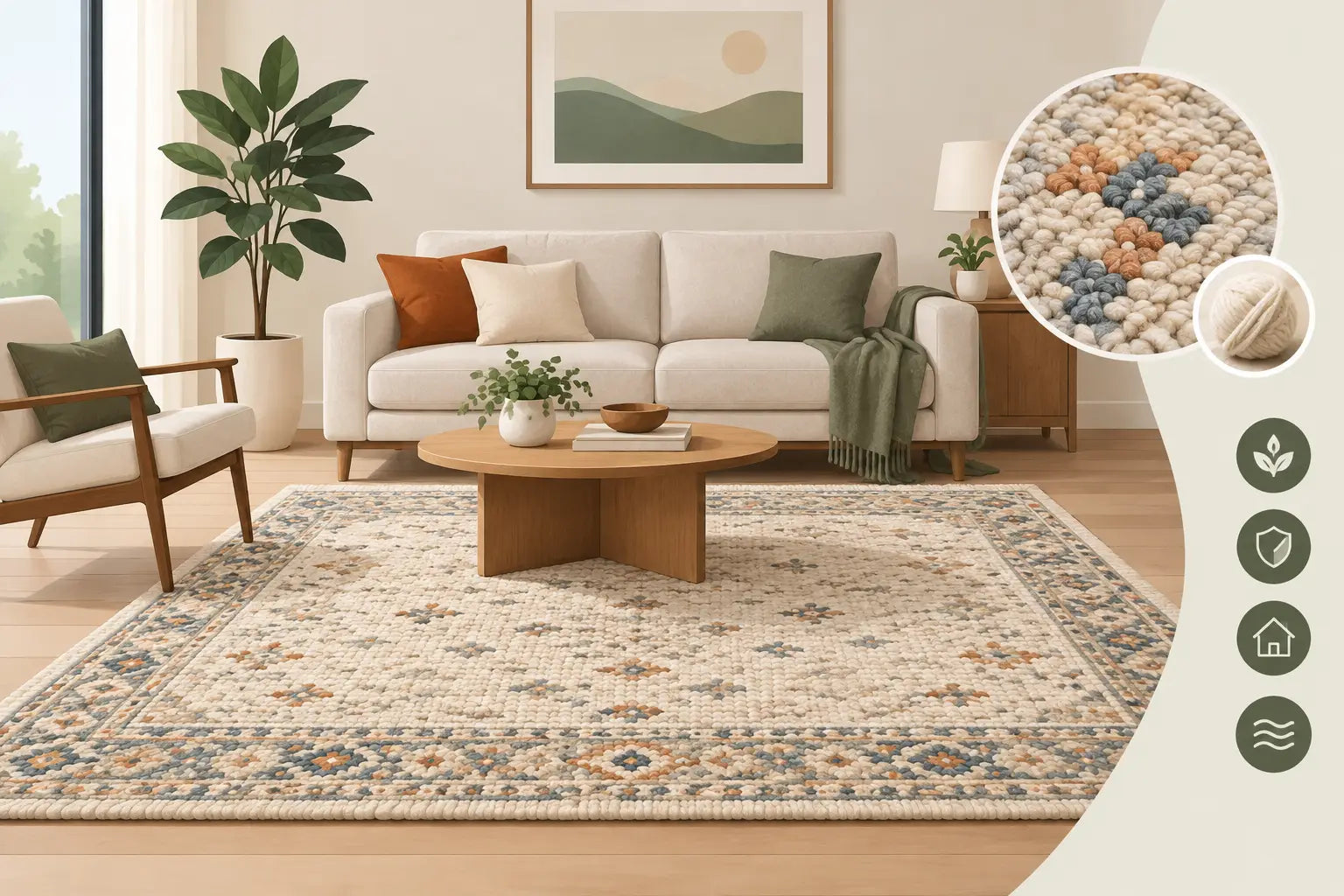
The phrase hand knotted describes how a rug is built, not simply how it looks. Skilled weavers tie individual knots around the vertical foundation threads, row by row, before securing them with weft threads. This is a labor-intensive process, and it creates a true pile that is part of the rug's structure rather than attached to a backing with glue.
That construction gives a hand-knotted rug a level of integrity that machine-made and hand-tufted alternatives generally cannot match. A hand-tufted rug may look appealing at first, but its fibers are often held in place with adhesive. Over time, that backing can dry out or weaken, particularly in rooms with regular foot traffic. A properly made hand-knotted rug is constructed to be used, cleaned, and enjoyed over generations.
Wool is equally central to the equation. It is a natural fiber with a soft hand, springy texture, and a subtle luster that synthetic fibers often imitate but rarely duplicate. Together, wool and hand-knotting create a piece that feels substantial without needing to feel overly formal.
Natural Wool Brings Everyday Comfort
A quality wool rug has a welcoming texture that makes a room feel finished. Under bare feet, wool offers cushion and warmth, especially in bedrooms and sitting areas where comfort matters as much as appearance. It also helps soften the acoustics of a space, reducing the hollow sound that can come from hardwood, tile, or other hard-surface flooring.
Wool has natural resilience. Its fibers have a crimped structure that allows them to bend under pressure and recover well, which is especially useful beneath coffee tables, dining chairs, and frequently used seating. Some compression is normal over time, particularly under very heavy furniture, but quality wool generally handles daily use beautifully.
It is also naturally insulating. In cooler months, a wool rug creates a warmer surface underfoot. In a large room with high ceilings or an open floor plan, that visual and physical warmth can make the entire space feel more comfortable and grounded.
Color with Depth, Not a Flat Finish
Wool takes dye exceptionally well, which is one reason handmade wool rugs offer such nuanced color. A soft ivory field may contain flecks of cream, sand, and gray. A blue border may shift from faded denim to a deeper indigo depending on the light. This variation gives a hand-knotted rug its visual life.
For homeowners who want a room to feel layered rather than overly coordinated, this depth is invaluable. An antique-inspired Turkish Oushak can soften a new sofa, while a colorful Afghan or Persian rug can bring energy to a more neutral room. The color is not merely printed on the surface. It is woven into the pile, where it can be appreciated from every angle.
Built for Rooms That Are Actually Lived In
One of the most practical hand knotted wool rug benefits is durability. These rugs are often excellent choices for living rooms, dining rooms, hallways, and entries, provided the design, pile, and placement suit the traffic level. A dense, lower-pile rug may be particularly well suited to a busy dining area, while a plush Moroccan-style wool rug can be wonderful in a bedroom or lower-traffic lounge.
Wool also has a natural protective coating called lanolin, which helps it resist dirt and spills better than many people expect. That does not mean a wool rug is stain-proof. Red wine, pet accidents, oil, and strongly colored foods should always be addressed promptly. Still, the fiber often gives you valuable time to blot a fresh spill before it settles.
For routine care, regular vacuuming without an aggressive beater bar is usually enough to remove surface dust and grit. Rotate the rug every so often to encourage even wear, and use a quality rug pad to provide support, help prevent shifting, and protect the flooring underneath. Professional washing by a specialist is the right choice when deeper cleaning is needed.
Craftsmanship Creates a More Personal Home
No two authentic hand-knotted rugs are exactly alike. Variations in weave, color, motif, and size are not flaws to be corrected. They are evidence of human hands and traditional processes. That individuality is especially meaningful in a time when many home furnishings are designed to be replaced after a few seasons.
A handmade rug can be the starting point for an entire room. Pull a muted sage, terracotta, navy, or golden brown from the rug into pillows, artwork, or drapery. Or let the rug be the standout element beneath clean-lined furniture. Vintage and traditional pieces often look especially compelling with modern furnishings because the contrast feels collected rather than staged.
This is also where scale matters. In a living room, a rug should usually be large enough for the front legs of the main seating to rest on it. In a dining room, allow enough room for chairs to remain on the rug when pulled back. A runner should leave a visible border of flooring on each side. The right construction deserves the right proportions, because a beautiful rug can lose its impact when it is undersized for the room.
A Long-Term Value, With Realistic Expectations
Hand-knotted wool rugs can hold up remarkably well, and certain antique, vintage, or collectible examples may retain or increase their value. Still, it is best to buy a rug first because you love it and it works in your home. Not every handmade rug will appreciate like a rare antique, and resale value depends on age, condition, origin, design, size, and demand.
The more reliable value is longevity. A high-quality handmade wool rug may be cleaned, repaired, and passed along in ways that many mass-market floor coverings cannot. Fringes can be stabilized, edges can be repaired, and localized wear can often be addressed by a skilled rug professional. This repairability is a meaningful advantage when compared with rugs that must be discarded once their backing fails.
There is an upfront cost to consider. Hand-knotting requires time and skilled labor, while good wool is a premium natural material. Yet spreading that cost across years of use can make a handmade rug a thoughtful purchase, particularly for a prominent space where design and durability both matter.
Choosing the Right Piece for Your Space
Start with how the room functions. A busy family room may call for a forgiving pattern with several colors and a lower, denser pile. A primary bedroom may be the ideal place for a softer, more textural rug. If pets or young children are part of the household, look for color variation and patterned areas that are more forgiving between cleanings.
Then consider the style you want to live with. Turkish Oushaks and faded Persian designs bring an easy, timeless elegance. Kilims offer a flatter weave and graphic appeal. Moroccan rugs create softness and relaxed texture. Afghan and Kazak rugs bring bold geometry and saturated color, while Chinese and fish-design rugs can introduce graceful, artistic detail.
At Belmont Rugs, we believe the best choice is not the rug that follows a passing trend. It is the one whose materials, dimensions, and character make your room feel more like yours. Give yourself time to picture it in morning light, beneath your furniture, and in the rhythm of everyday life. The right handmade wool rug has a way of becoming familiar quickly, then unforgettable.